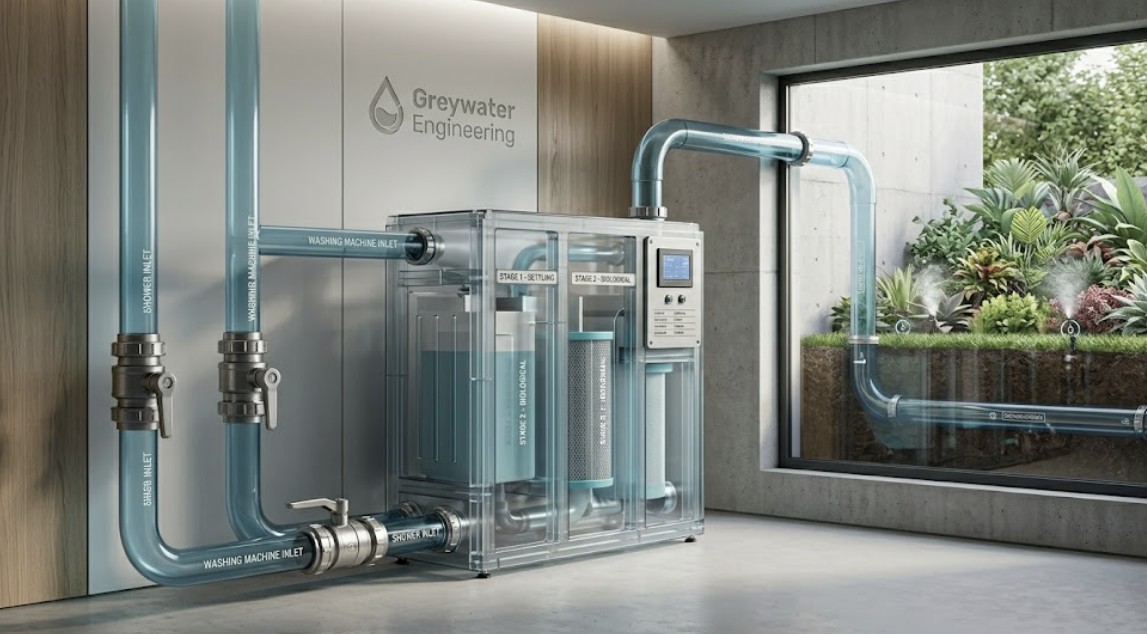
Water conservation is becoming a major concern for homeowners as utility costs rise and drought conditions affect many regions. Residential greywater recycling systems provide a practical solution by capturing and reusing gently used household water for irrigation, toilet flushing, and other non-potable applications. These systems reduce freshwater demand, lower wastewater discharge (The long-term [greywater recycling benefits] go beyond simple savings, impacting everything from septic health to property value.), and help homeowners create more sustainable properties.
In a typical household, showers, bathtubs, bathroom sinks, and washing machines generate thousands of gallons of reusable water every year. Instead of sending this water directly into the sewer system, residential greywater recycling systems redirect it for secondary use. Properly designed systems can reduce household water consumption by up to 50%, depending on climate, landscaping, and household size.
Before choosing a system, it is vital to understand the mechanical stages involved. We have detailed the full process in our guide on [how do residential greywater systems work] in real-world plumbing environments.
Table of Contents
What Are Residential Greywater Recycling Systems?
Residential greywater recycling systems collect lightly used water from household fixtures and redistribute it for non-drinking purposes. Greywater differs from blackwater because it does not contain toilet waste or sewage contamination.
Typical greywater sources include:
- Bathroom sinks
- Showers
- Bathtubs
- Washing machines
- Laundry tubs
Water from kitchen sinks and dishwashers is usually excluded because it contains grease, food waste, and higher organic contamination levels.
Greywater may appear cloudy or slightly discolored, but it still contains nutrients beneficial for landscaping and soil health. When reused properly, greywater becomes a valuable resource instead of waste.
Difference Between Greywater and Blackwater
| Water Type | Source | Reuse Potential | Treatment Requirement |
|---|---|---|---|
| Greywater | Showers, sinks, laundry | High | Moderate |
| Blackwater | Toilets, kitchen drains | Limited | Extensive |
| Rainwater | Roof collection | High | Minimal |
| Stormwater | Surface runoff | Moderate | Variable |
Residential greywater recycling systems are specifically designed to manage greywater safely while preventing contamination risks.
Here: environmental impact of household wastewater
How Residential Greywater Recycling Systems Work
Most residential greywater recycling systems follow four core stages:
- Collection
- Filtration
- Distribution
- Reuse
Greywater enters a diversion pipe before reaching the sewer system. It then moves through filtration equipment that removes lint, hair, and solid particles. Some advanced systems also disinfect water using ultraviolet light or chlorine treatment.
Once treated, the water is distributed through irrigation pipes, drip systems, or storage tanks for reuse.
Basic System Components
| Collection Pipes | These pipes transport water from fixtures such as showers and laundry machines into the greywater system. |
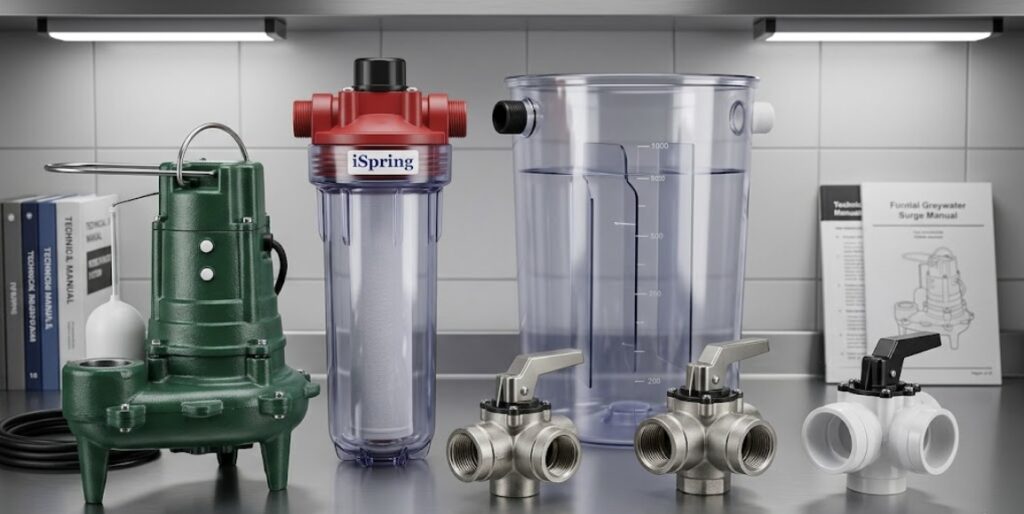
| Diverter Valve | A three-way diverter valve allows homeowners to switch water flow between the greywater system and the sewer line when necessary. |
| Filtration Unit | Filters remove suspended solids, lint, soap residues, and hair that could clog irrigation lines. |
| Storage Tank | Some residential greywater recycling systems include surge tanks for temporary holding. Greywater should not be stored for more than 24 hours because bacterial growth increases rapidly. |
| Distribution Network | Pumps or gravity-fed irrigation lines move treated water to gardens, landscaping, or toilets. |
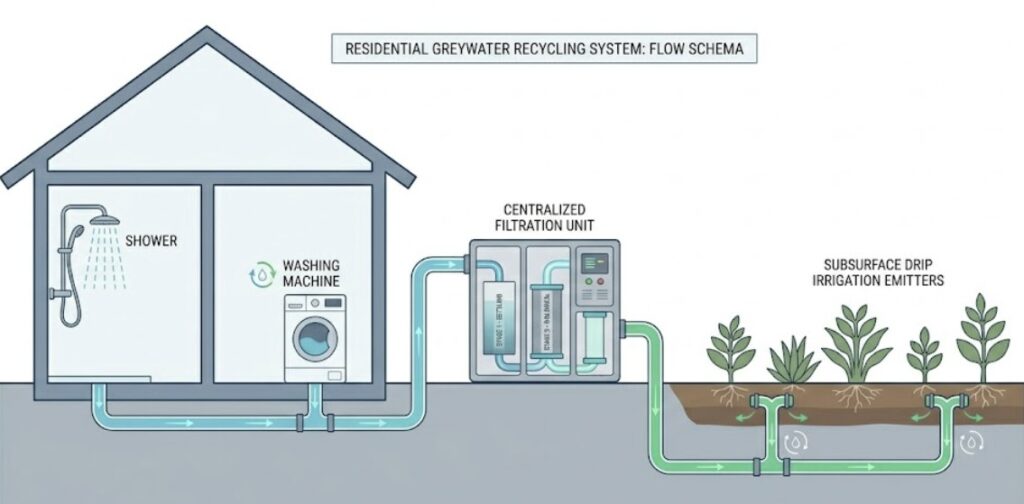
Types of Residential Greywater Recycling Systems
Different homes require different system designs. The best residential greywater recycling systems depend on property layout, climate, plumbing accessibility, and irrigation goals.
Each type follows a specific hydraulic path. For a deeper engineering look at the collection and diversion stages of these models, refer to our technical breakdown of [how do residential greywater systems work].
Laundry-to-Landscape Systems
Laundry-to-landscape systems are among the simplest and most affordable options available. These systems redirect washing machine discharge water directly to outdoor irrigation zones.
Key features include:
- No major plumbing modifications
- Low installation costs
- Gravity or pump-assisted operation
- Minimal maintenance
These systems work especially well in dry climates where landscaping requires regular watering.
| Feature | Laundry-to-Landscape |
|---|---|
| Installation Cost | Low |
| Maintenance | Low |
| Water Source | Washing machine |
| Best Use | Trees and shrubs |
| Complexity | Simple |
See: Laundry-to-Landscape (L2L) technical manuals
Branched Drain Systems
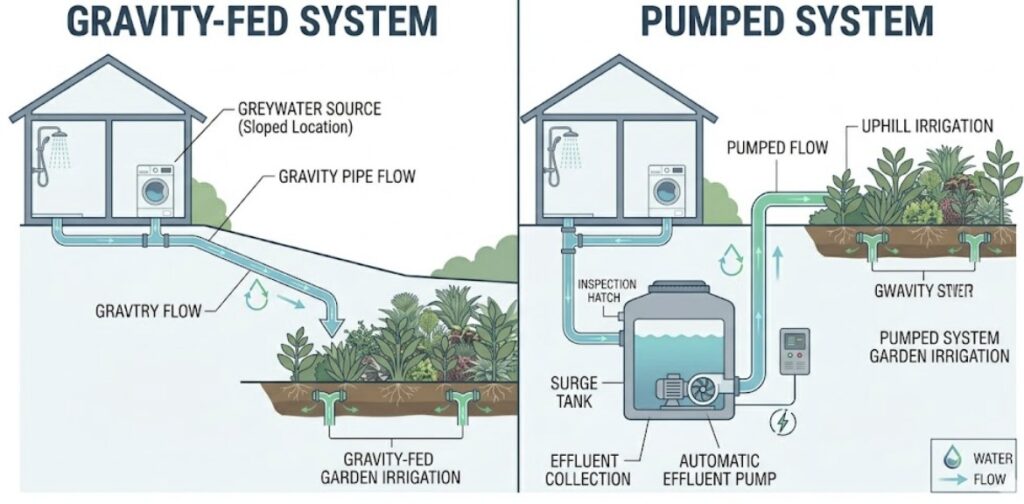
Branched drain systems use gravity-fed plumbing to distribute greywater evenly through multiple outlets.
| Benefits include: | No electricity required Long-term durability Low operating costs Even water distribution |
However, installation can be labor-intensive because pipes require precise slope calculations.
Pumped Greywater Systems
Homes with uphill landscaping or long irrigation distances often require pumped residential greywater recycling systems.
| These systems include: | Surge tanks Effluent pumps Pressure distribution lines Larger filtration units |
Pumped systems require a reliable electrical source. If your property is off-grid, you must ensure your solar array can handle the surge loads of wastewater pumps. We recommend following a [complete off-grid power blueprint for retreat cabins] to balance your water and energy needs.
Constructed Wetland Systems
Constructed wetlands biologically filter greywater through aquatic plants, gravel beds, and natural microbial activity.
| Advantages include: | Ecological filtration Wildlife habitat creation Improved water purification Natural nutrient absorption |
These systems require significant space and are better suited for larger properties.
Greywater Treatment Systems (GTS)
Advanced greywater treatment systems disinfect and purify water for indoor reuse applications such as toilet flushing.
| These systems typically include: | Multi-stage filtration UV sterilization Chemical treatment Storage tanks Monitoring controls |
They are more expensive but provide the highest water reuse potential.
Benefits of Residential Greywater Recycling Systems
Lower Water Bills
One of the biggest advantages of residential greywater recycling systems is reduced utility expenses. Reusing laundry and shower water can significantly lower monthly water consumption.
Households with extensive landscaping often achieve the greatest savings.
Reduced Freshwater Demand
Freshwater supplies are increasingly stressed due to population growth and climate change. Greywater reuse reduces demand on municipal systems and groundwater supplies.
Sustainable Landscaping
Greywater contains nutrients such as phosphorus and nitrogen that support plant growth naturally.
This makes greywater especially useful for:
- Fruit trees
- Shrubs
- Ornamental gardens
- Native landscaping
Reduced Wastewater Discharge
Residential greywater recycling systems reduce the volume of wastewater entering septic systems and municipal treatment plants.
This decreases environmental pollution and infrastructure strain.
Improved Drought Resilience
In drought-prone areas, greywater irrigation provides a reliable alternative water source that supports landscaping during watering restrictions.

Greywater Safety Guidelines
Greywater reuse requires careful management to protect human health and environmental quality.
Do Not Store Greywater Long-Term
Greywater should generally be used within 24 hours because bacteria multiply rapidly in stagnant water.
Use Plant-Friendly Products
Soap ingredients greatly affect greywater quality.
| Avoid products containing: | Sodium Boron Chlorine bleach Harsh disinfectants Synthetic fragrances |
Preferred products include biodegradable, low-salt cleaners.
Prevent Human Contact
Subsurface irrigation systems minimize exposure risks and reduce odor problems.
Avoid spray irrigation unless water has undergone advanced treatment.
Avoid Root Crops
Greywater should not directly contact edible plant portions, especially root vegetables.
| Safe applications include: | Trees Shrubs Ornamental plants Vine crops with elevated fruit |
Prevent Pooling and Runoff
Standing greywater can create mosquito breeding conditions and contamination risks.
Proper drainage and soil infiltration are essential.
Residential Greywater Recycling Systems Installation Requirements
Local Regulations and Permits
Greywater regulations vary widely between states and municipalities. Some areas allow simple systems without permits, while others require engineered plans and inspections.
| Homeowners should verify: | Plumbing codes Health department rules Irrigation restrictions Permit requirements Backflow prevention standards |
Soil Percolation Testing
Soil drainage capacity determines whether greywater can infiltrate safely without pooling.
Sandy soils drain quickly, while clay soils may require engineered solutions.
Pipe Labeling
Greywater pipes should be clearly marked to avoid accidental cross-connections with potable water systems.
Seasonal Shutoff Planning
In colder climates, systems require winterization to prevent pipe freezing and damage.
Best Applications for Residential Greywater Recycling Systems
Landscape Irrigation
Landscape irrigation remains the most common application because it requires minimal treatment.
| Suitable irrigation targets include: | Trees Shrubs Flower beds Drought-tolerant landscaping |
Toilet Flushing
Advanced residential greywater recycling systems can supply treated water for toilet flushing, significantly reducing potable water use indoors.
Ornamental Gardens
Greywater works well for non-edible decorative plants that tolerate variable nutrient levels.
Wildlife Habitats
Constructed wetlands and eco-landscapes benefit from greywater irrigation while supporting birds, insects, and pollinators.
Common Residential Greywater Recycling System Designs
Gravity-Fed Systems
Gravity-fed systems rely on elevation differences instead of pumps.
| Advantages | Limitations |
| Low energy use Fewer mechanical failures Lower operating costs | Requires favorable site elevation Limited pressure capacity |
Pressurized Systems
Pressurized systems use pumps to distribute water over larger distances.
| Advantages | Limitations |
| Flexible installation Better distribution control Suitable for difficult landscapes | Higher maintenance Increased energy use Pump replacement costs |
Hybrid Systems
Hybrid systems combine gravity flow with supplemental pumping when necessary.
These systems balance efficiency and flexibility.
Maintenance Requirements
Residential greywater recycling systems require regular inspection to ensure safe operation.
Routine Maintenance Tasks
| Maintenance Item | Frequency |
|---|---|
| Filter cleaning | Monthly |
| Pump inspection | Quarterly |
| Pipe flushing | Every 6 months |
| Valve testing | Quarterly |
| Tank cleaning | Annually |
Signs of System Problems
Watch for:
- Bad odors
- Slow drainage
- Pooling water
- Clogged emitters
- Plant stress
- Excessive algae growth
Regular maintenance extends system lifespan and prevents costly repairs.
Cost of Residential Greywater Recycling Systems
Costs vary significantly depending on system complexity.
| System Type | Estimated Cost |
|---|---|
| Bucket system | $20–$100 |
| Laundry-to-landscape | $150–$1,500 |
| Branched drain | $500–$3,000 |
| Pumped system | $2,000–$6,000 |
| Advanced treatment system | $5,000–$15,000+ |
Factors affecting pricing include:
- Plumbing modifications
- Pump requirements
- Filtration level
- Irrigation complexity
- Permit fees
- Labor costs
DIY installations reduce costs substantially for simple systems.
Top Residential Greywater Recycling Products in 2026
Several commercially available products support residential greywater recycling systems.
ISpring WGB32B 3-Stage Filtration System
Ideal for high-flow filtration (up to 15 GPM) to protect sensitive drip irrigation. Its coconut shell carbon filters remove sediment and chemicals that could alter soil pH. It’s an “over-engineered” solution that ensures long-term system health.
Check current price on Amazon –>
Zoeller Laundry Pump Package
If you are diverting water from a basement laundry room, this is the most reliable “all-in-one” basin and pump kit. It’s a cast-iron beast designed to handle the lint and heat of high-frequency washing cycles without skipping a beat.
Check current price on Amazon –>
Liberty Pumps 404 Residential Compact Drain Pump
When a project requires the absolute best in compact drainage, I specify the Liberty 404. It is a professional-grade, low-profile pump designed to handle laundry and sink waste with extreme reliability. Unlike cheaper alternatives, it is factory-assembled and tested to ensure it runs quietly and survives the heat and lint of modern washing machines for years.
Check current price on Amazon –>
Saniflo SANIVITE Greywater Pump
Known for being whisper-quiet, the SANIVITE can push water up to 16 feet vertically. It is specifically built to handle hot, soapy water up to 140°F, making it the top choice for multi-fixture greywater collection.
Check current price on Amazon –>
Little Giant Wastewater Collection System
This pre-assembled system is my go-to for under-sink or crawlspace installations. The pressure switch is far more reliable than traditional float switches in small tanks, preventing the common “pump hang-up” issues that plague cheaper models.
Check current price on Amazon –>
NSF/ANSI 350 Certification Explained
Modern residential greywater recycling systems increasingly comply with NSF/ANSI Standard 350.
This certification establishes requirements for:
- Water quality performance
- Material safety
- Microbiological reduction
- Chemical treatment effectiveness
- System reliability
Why Certification Matters
Certified systems provide:
- Better public health protection
- Regulatory compliance
- Verified treatment performance
- Greater homeowner confidence
NSF/ANSI 350-certified systems are particularly important when greywater is reused indoors for toilet flushing or decorative water features.
See: NSF/ANSI Standard 350 for water reuse
Choosing the Right Residential Greywater Recycling Systems
| For Small Homes | Simple laundry-to-landscape systems are often sufficient. |
| For Large Landscapes | Branched drain or pumped irrigation systems provide broader coverage. |
| For Urban Properties | Compact packaged systems with filtration and storage tanks work best in limited spaces. |
| For Maximum Water Savings | Advanced treatment systems support indoor reuse and maximize conservation potential. |
Questions to Ask Before Installation
- How much greywater does the household produce?
- What irrigation areas need water?
- Does the property support gravity flow?
- What local permits are required?
- What maintenance level is acceptable?
- Is indoor reuse desired?
- What is the available budget?
Mistakes to Avoid With Residential Greywater Recycling Systems
| Using Harmful Cleaning Products | High-salt detergents and chlorine bleach damage soil and plants. |
| Overwatering Landscapes | Greywater should match actual irrigation needs to prevent runoff. |
| Ignoring Maintenance | Clogged filters and neglected pumps reduce efficiency and create health risks. |
| Poor Drainage Design | Improper grading causes standing water and mosquito problems. |
| Oversized Systems | Systems should match actual household water generation and irrigation demand. |
Future Trends in Residential Greywater Recycling Systems
Greywater technology continues to improve as water scarcity concerns grow.
Emerging innovations include:
- Smart irrigation controls
- Automated filtration monitoring
- UV disinfection integration
- Modular treatment units
- AI-driven water management systems
Builders increasingly integrate residential greywater recycling systems into sustainable home construction projects.
Green building certifications and stricter water conservation standards are expected to accelerate adoption over the next decade.
Conclusion
Residential greywater recycling systems offer homeowners a practical and environmentally responsible way to reduce water consumption, lower utility bills, and support sustainable landscaping. From simple laundry-to-landscape designs to advanced NSF-certified treatment systems, there are solutions suitable for nearly every property type and budget.
The most effective systems prioritize simplicity, proper filtration, safe irrigation practices, and regular maintenance. Homeowners who select plant-friendly products, follow local regulations, and match system design to their property conditions can achieve long-term water savings while reducing environmental impact.
As freshwater supplies become increasingly strained, residential greywater recycling systems are transitioning from niche sustainability upgrades into mainstream residential infrastructure. For homeowners focused on resilience, conservation, and efficient resource management, greywater reuse represents one of the most valuable water-saving investments available today.
Are residential greywater recycling systems safe for home use?
Residential greywater recycling systems are generally safe when they are properly designed, installed, and maintained according to local plumbing and health regulations. The water reused in these systems comes from showers, bathroom sinks, and laundry machines rather than toilets, making it suitable for non-potable applications such as irrigation and toilet flushing. Most health concerns can be avoided by using biodegradable cleaning products, preventing water storage for long periods, and minimizing direct human contact with untreated greywater.
How much water can a household save with residential greywater recycling systems?
The amount of water savings depends on household size, landscaping needs, and daily water consumption habits, but many homeowners reduce freshwater use by 30% to 50%. Homes with large gardens and frequent irrigation demands usually benefit the most because greywater from showers and laundry can replace a significant portion of outdoor watering needs. Over time, these savings can lower utility bills substantially while also reducing pressure on municipal water systems.
Can residential greywater recycling systems be installed in older homes?
Older homes can often support residential greywater recycling systems with minor plumbing modifications, especially when installing simple laundry-to-landscape or branched drain systems. Retrofitting may require access to existing drain lines and proper yard grading to ensure safe water distribution. More advanced treatment systems may involve additional plumbing work, electrical upgrades, and permit approvals, but many homeowners successfully integrate greywater reuse into older residential properties.
Do residential greywater recycling systems produce bad odors?
Properly maintained residential greywater recycling systems should not produce strong odors because the water is quickly distributed into soil or irrigation zones. Odor problems usually develop when greywater is stored too long, allowed to stagnate, or trapped inside clogged pipes and filters. Using systems that move water immediately after use and performing regular maintenance helps prevent bacterial growth and unpleasant smells.
Can greywater be used on vegetable gardens?
Greywater can sometimes be used for vegetable gardens, but it should never directly contact edible portions of plants. Residential greywater recycling systems are safest when used for fruit trees, shrubs, and ornamental plants because these applications reduce contamination risks. Root vegetables and leafy greens are generally not recommended for direct greywater irrigation unless advanced treatment systems are used and local regulations specifically allow it.
What cleaning products work best with residential greywater recycling systems?
Biodegradable, low-sodium, and boron-free cleaning products work best because they reduce soil damage and protect plant health. Harsh chemicals such as chlorine bleach, antibacterial soaps, and detergents with high salt concentrations can accumulate in the soil and negatively affect landscaping over time. Homeowners using residential greywater recycling systems should carefully review detergent ingredients to maintain healthy irrigation conditions.
How often do residential greywater recycling systems need maintenance?
Maintenance frequency depends on system complexity, water usage, and filtration design, but most residential greywater recycling systems require monthly filter inspections and occasional pipe flushing. Pumps, valves, and irrigation lines should also be checked regularly to ensure proper flow and prevent clogging. Simple gravity-fed systems generally require less maintenance than advanced treatment units that include pumps, UV sterilization, or storage tanks.
Can residential greywater recycling systems reduce water bills significantly?
Many homeowners experience noticeable reductions in water bills after installing residential greywater recycling systems because outdoor irrigation often represents a major portion of household water use. In dry climates where lawns and landscaping require frequent watering, reusing laundry and shower water can substantially decrease municipal water consumption. Long-term savings often offset installation costs over several years.
Are permits required for residential greywater recycling systems?
Permit requirements vary depending on local building codes and health department regulations. Some jurisdictions allow basic residential greywater recycling systems without permits if they meet simple design guidelines, while others require inspections, engineered plans, and professional installation. Homeowners should always verify local rules before beginning installation to ensure legal compliance and safe operation.
Can residential greywater recycling systems work during winter?
Residential greywater recycling systems can operate during winter in mild climates, but colder regions may require seasonal shutdowns or insulated plumbing to prevent freezing. Some advanced systems include freeze protection features and indoor treatment components that allow year-round operation. Proper winterization is important because frozen pipes and pumps can cause significant system damage.
What is the difference between greywater and reclaimed water?
Greywater refers to lightly used household water collected directly from showers, sinks, and laundry appliances, while reclaimed water usually refers to highly treated municipal wastewater processed at centralized treatment facilities. Residential greywater recycling systems manage water onsite for immediate reuse, whereas reclaimed water systems distribute treated water through separate municipal pipelines for broader community applications.
Do residential greywater recycling systems require electricity?
Some residential greywater recycling systems operate entirely through gravity flow and do not require electricity, making them energy efficient and inexpensive to maintain. More advanced systems that include pumps, filtration units, UV treatment, or pressurized irrigation systems do require electrical power. The need for electricity depends on property elevation, irrigation distance, and system complexity.
Can residential greywater recycling systems increase home value?
Eco-friendly home upgrades are becoming increasingly attractive to buyers, especially in regions facing water shortages and rising utility costs. Residential greywater recycling systems may improve property appeal by lowering water expenses and supporting sustainable living practices. Buyers interested in green homes often view water reuse systems as a long-term financial and environmental benefit.
How long do residential greywater recycling systems last?
Well-maintained residential greywater recycling systems can last for decades, particularly gravity-based systems with minimal mechanical components. Pumps and filtration equipment may require periodic replacement depending on usage levels and maintenance quality. Durable piping materials and proper installation practices greatly extend overall system lifespan.
Can residential greywater recycling systems be connected to drip irrigation?
Some advanced residential greywater recycling systems can connect to drip irrigation systems if the water is properly filtered to prevent clogging. Standard drip emitters are sensitive to lint, soap residue, and suspended particles, so high-quality filtration is essential. Many homeowners instead use mulch basins or subsurface distribution methods that are less prone to blockage.
Are residential greywater recycling systems environmentally friendly?
Residential greywater recycling systems are considered highly environmentally friendly because they reduce freshwater demand, lower wastewater discharge, and support sustainable landscaping. Reusing household water decreases strain on municipal treatment facilities while conserving groundwater and reservoir supplies. These systems also reduce the energy required for water treatment and long-distance water transportation.
Can greywater systems be installed by homeowners?
Simple setups such as laundry-to-landscape designs are often suitable for DIY installation by homeowners with basic plumbing knowledge. More advanced setups involving pumps, filtration tanks, or indoor water reuse usually require licensed professionals to ensure compliance with plumbing and health regulations. Before starting any installation, homeowners should always check local building codes and permit requirements.
What happens if a greywater system becomes overloaded?
If the system receives more water than the soil or landscape can absorb, excess water may pool on the ground or automatically divert back into the sewer line through an overflow valve. Proper design is important because it prevents runoff, flooding, odors, and drainage problems. Balancing household water production with irrigation demand helps maintain efficient and safe operation.
Can greywater systems support large landscapes?
Large gardens and landscapes can benefit significantly from reused household water, especially in dry climates where irrigation demand is high. Pumped distribution setups and branched drain designs are commonly used to move water across larger areas efficiently. However, the system must be correctly sized so the amount of reusable water matches the watering needs of the property.
Why are greywater systems becoming more popular?
More homeowners are looking for sustainable ways to reduce water consumption, lower utility bills, and improve environmental efficiency. Concerns about drought, climate change, and rising water costs have increased interest in water reuse technologies for residential properties. Improvements in filtration equipment and easier installation methods have also made these systems more affordable and practical for everyday use.
4 thoughts on “Residential Greywater Recycling Systems: The 2026 Engineering Guide”