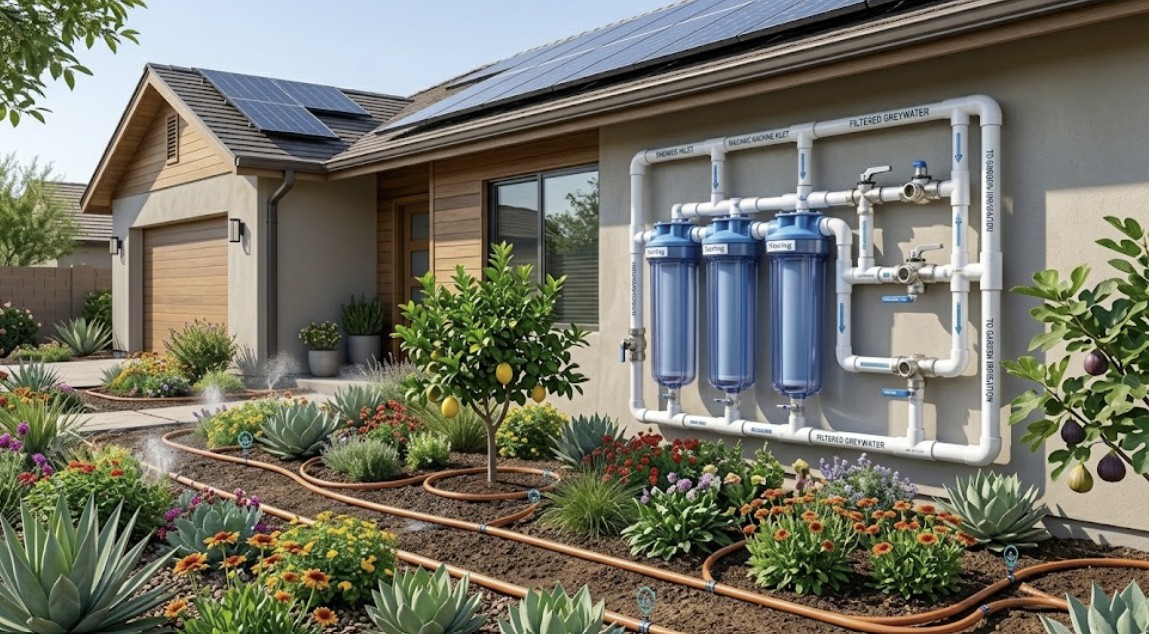
Residential water consumption continues to rise while freshwater supplies become increasingly strained. A properly designed greywater recycling system allows homeowners to reuse wastewater from showers, bathtubs, bathroom sinks, and washing machines for irrigation and non-potable applications. For many homeowners, the technical side can be confusing. To understand the transition to a sustainable home, you first need to ask: how do residential greywater systems work in a real-world plumbing environment?. By diverting reusable water before it enters the sewer system, households can reduce water bills, conserve potable water, and support sustainable landscaping. Once you understand the mechanics, selecting the right hardware is the next step. You can find our top equipment picks and brand reviews in our [Residential Greywater Recycling Systems: The 2026 Engineering Guide].
This guide explains exactly how residential greywater systems work, including system types, plumbing layouts, treatment methods, installation requirements, maintenance procedures, and cost comparisons.
Table of Contents
What Is a Residential Greywater System?
A residential greywater system is a water recycling setup that captures lightly used household wastewater and redirects it for secondary uses instead of sending it directly to the sewer or septic system.
| Greywater typically comes from | Greywater does not include wastewater from |
| Showers Bathtubs Bathroom sinks Laundry machines Laundry sinks | Toilets Urinals Kitchen sinks Dishwashers Bidets |
Water contaminated with human waste is classified as blackwater and requires full sewage treatment.
In most homes, greywater accounts for 50% to 80% of total wastewater production. Reusing this water significantly lowers municipal water demand and reduces wastewater discharge.
How Do Residential Greywater Systems Work?
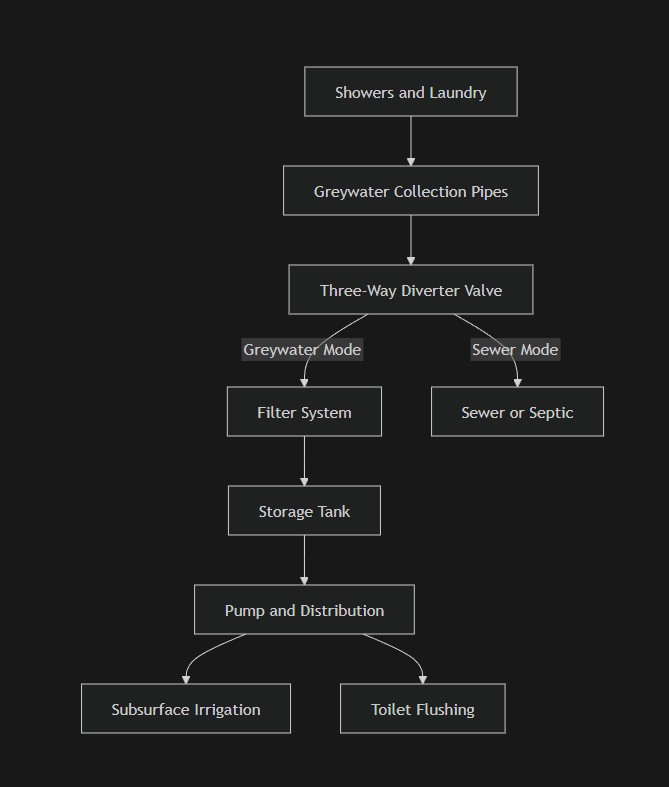
Residential greywater systems work by collecting wastewater from designated plumbing fixtures, filtering or treating the water, storing it temporarily if needed, and distributing it to approved reuse applications.
To fully grasp how do residential greywater systems work, we must analyze the process through these five hydraulic stages:
- Collection
- Diversion
- Filtration or treatment
- Storage
- Distribution and reuse
Stage 1: Greywater Collection
Separate plumbing lines capture wastewater from approved fixtures before it mixes with blackwater.
The most common collection sources are:
| Fixture | Greywater Suitability | Typical Volume |
|---|---|---|
| Shower | Excellent | High |
| Bathtub | Excellent | High |
| Bathroom sink | Good | Moderate |
| Washing machine | Excellent | Very High |
| Kitchen sink | Usually avoided | Variable |
Laundry systems are especially popular because they require minimal plumbing modifications.
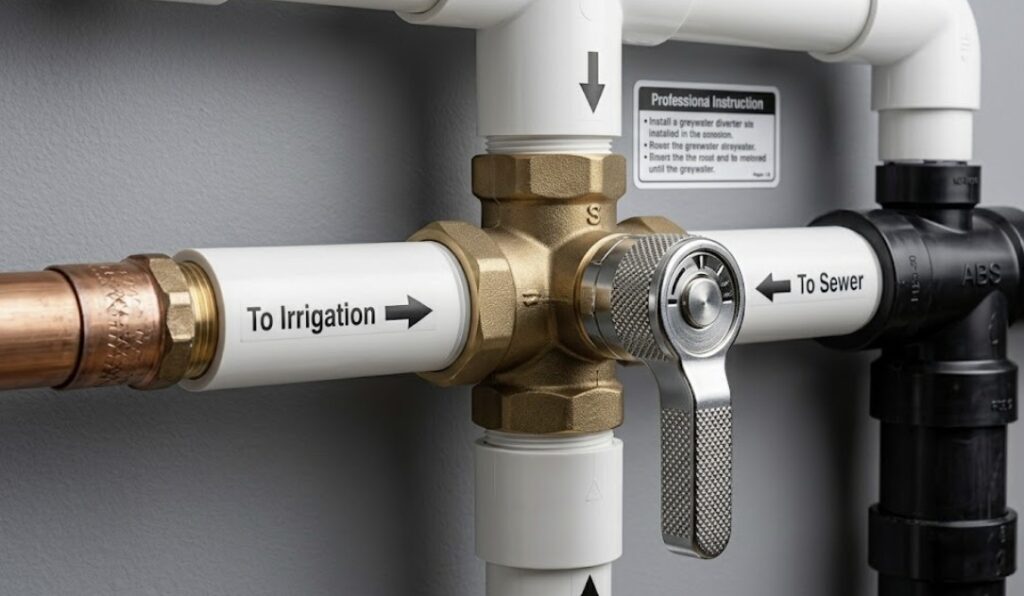
Stage 2: Water Diversion
A diverter valve controls whether water flows:
- Into the greywater system
- Into the sewer or septic line
This valve is essential because some household products may damage plants or soil.
Examples include:
- Chlorine bleach
- Harsh detergents
- Boron-heavy soaps
- Sodium softener discharge
Three-way diverter valves allow homeowners to instantly switch modes.
System Control: A reliable 3-way valve is non-negotiable for bypassing your system during winter or when using bleach. I always specify the [Jandy 4715 3-Port Valve] for these layouts. Its “never-lube” technology ensures that the seals won’t dry out or leak, providing a smooth, airtight transition between your garden lines and the main sewer line.
Stage 3: Filtration and Treatment
Most residential greywater systems include some level of filtration to remove:
- Hair
- Lint
- Soap residue
- Sediment
- Organic particles
Treatment complexity depends on intended reuse.
Maintenance Pro-Tip: The biggest enemy of any greywater system isn’t the water itself, but micro-debris like hair and lint. If you are setting up a laundry-based system, I highly recommend installing a [Filtrol 160 Lint Filter] at the discharge point. It captures non-biodegradable fibers before they ever reach your mulch basins, significantly extending the life of your irrigation lines and preventing soil matting.
Simple Filtration Systems
| Basic systems may use: | Mesh filters Sedimentation chambers Gravel filters Sand filters |
| These systems are suitable for: | Subsurface irrigation Trees Ornamental plants |
Advanced Treatment Systems
| More advanced residential greywater systems include: | Activated carbon filters UV disinfection Chlorination Membrane filtration Membrane bioreactors (MBRs) |
| Advanced treatment enables reuse for: | Toilet flushing Surface irrigation Cooling systems Indoor non-potable uses |
Residential Greywater System Flow Diagram
Types of Residential Greywater Systems
The specifics of how do residential greywater systems work vary by property, as design depends on climate, terrain, and budget.
Laundry-to-Landscape Greywater Systems
Laundry-to-landscape systems are the simplest and most affordable residential greywater systems.
These systems divert washing machine discharge directly to outdoor irrigation zones.
How They Work
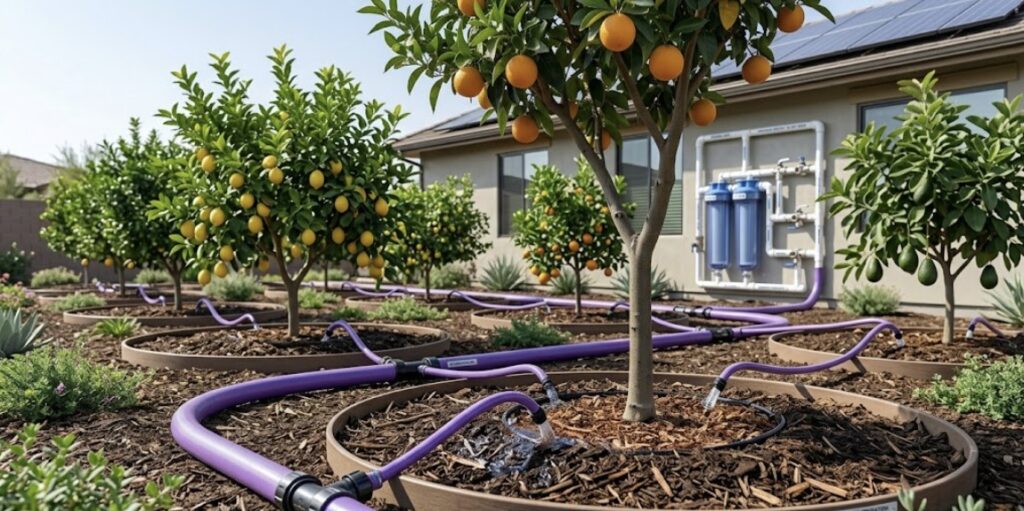
- The washing machine pump pushes water through irrigation tubing.
- Water flows into mulch basins near plants.
- No storage tank is required.
- Gravity and pump pressure distribute water outdoors.
Advantages
- Low installation cost
- Minimal plumbing changes
- No large storage tank
- Low maintenance
- No permit requirements in some areas
Limitations
- Works only with laundry water
- Limited filtration
- Irrigation-only application
| Feature | Laundry-to-Landscape |
|---|---|
| Average Cost | $150–$1,500 |
| Complexity | Low |
| Storage Tank | No |
| Pump Required | Existing washer pump |
| Best Use | Irrigation |
Branched Drain Greywater Systems
Branched drain systems rely on gravity rather than pumps.
Water from showers and sinks splits through multiple branching pipes that evenly distribute greywater throughout the landscape.
Key Characteristics
- No electricity required
- No storage tank needed
- Extremely energy efficient
- Works best on sloped properties
Ideal Applications
- Fruit trees
- Drought-resistant landscaping
- Large gardens
These systems reduce operational costs because they contain few mechanical components.
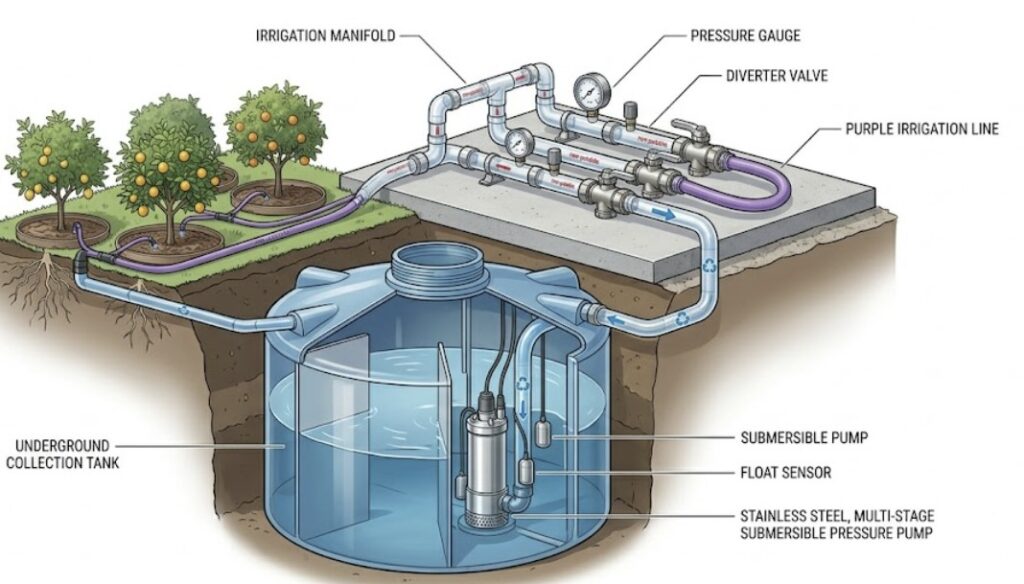
Pumped Residential Greywater Systems
Homes with uphill irrigation areas often require pumped greywater systems.
How Pumped Systems Operate
- Greywater enters a collection tank.
- A pump transfers water to irrigation lines or storage tanks.
- Float switches automate pump operation.
- Overflow protection prevents backups.
Components
- Collection reservoir
- Submersible pump
- Float sensors
- Check valves
- Pressure piping
Engineering Note: For pumped systems, you need a unit that can handle greywater’s varying temperatures and small solids without burning out. The [Zoeller M53 Mighty-Mate] is the “gold standard” in the industry for a reason. Its cast-iron housing and switch reliability make it the most trusted submersible pump for residential greywater pits where failure is simply not an option.
Pumped systems support larger landscapes and more complex reuse applications.
Sand Filter-to-Drip Irrigation Systems
These advanced residential greywater systems provide high filtration quality.
Operating Principle
Greywater passes through:
- Collection tank
- Sand filtration chamber
- Fine filtration
- Drip irrigation network
These systems are highly water-efficient because they deliver water directly to root zones.
| Benefits | Drawbacks |
| Reduced emitter clogging Automated operation Supplemental freshwater integration Consistent irrigation | Higher installation cost Frequent filter maintenance Requires electricity |
| System Type | Typical Cost | Complexity | Treatment Level |
|---|---|---|---|
| Laundry-to-landscape | Low | Low | Minimal |
| Branched drain | Low | Medium | Minimal |
| Pumped system | Medium | Medium | Moderate |
| Sand filter drip system | High | High | Advanced |
How Greywater Treatment Systems Work
Treatment systems improve water quality for safer reuse.
The three primary treatment categories are:
- Physical treatment
- Chemical treatment
- Biological treatment
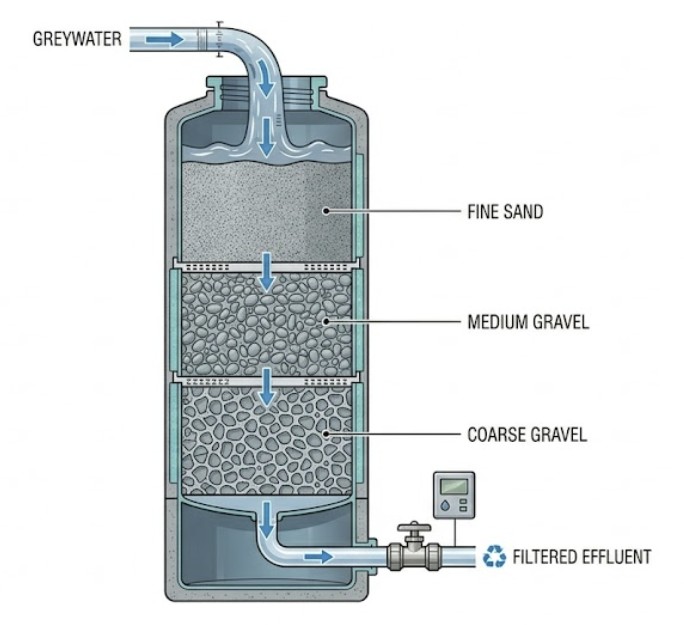
Physical Greywater Treatment Systems
Physical systems remove solids through mechanical separation.
Common Components
- Settling tanks
- Sand filters
- Gravel beds
- Cartridge filters
| Advantages | Limitations |
| Low operating cost Minimal energy usage Simple maintenance | Limited pathogen removal Restricted reuse applications |
These systems are common in rural households.
Chemical Greywater Treatment Systems
Chemical systems disinfect greywater and improve water quality.
Typical Treatment Methods
- Chlorination
- UV sterilization
- Activated carbon adsorption
- Coagulation
Suitable Uses
- Toilet flushing
- Recreational landscaping
- Surface irrigation
| Chemical treatment reduces: | Pathogens Odors Organic contaminants |
However, these systems require careful monitoring and chemical handling.
Membrane Bioreactor Greywater Systems
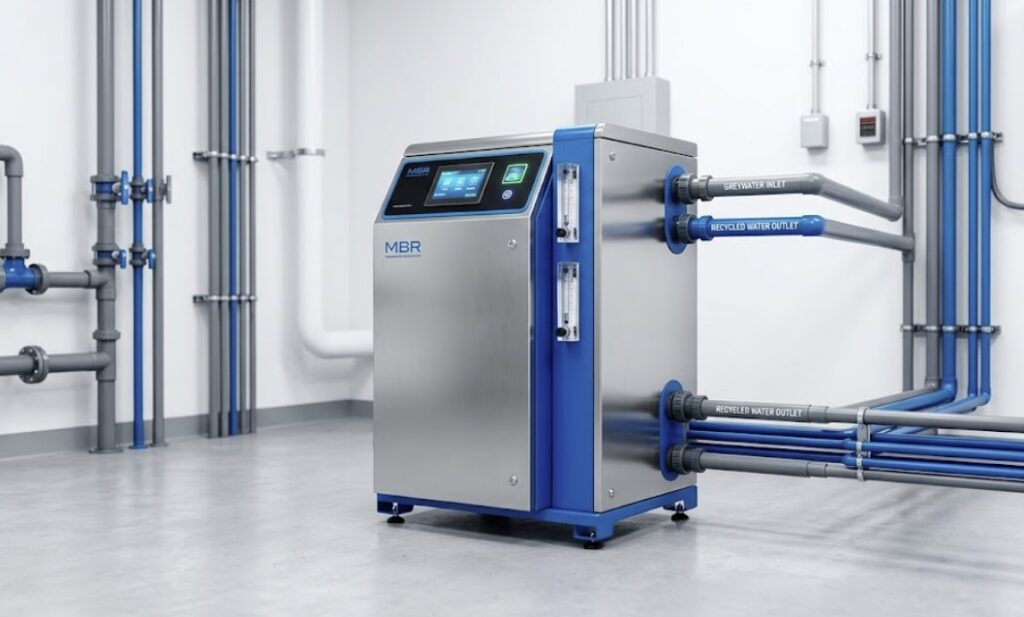
Membrane bioreactor (MBR) systems represent the most advanced residential greywater technology.
These systems combine:
- Biological decomposition
- Ultrafiltration membranes
- Fine solids separation
How MBR Systems Work
The process includes:
- Biological treatment tank
- Activated sludge process
- Membrane filtration
- Treated water storage
The membrane blocks bacteria and suspended solids while allowing treated water to pass.
Benefits of MBR Systems
- Extremely high water quality
- Small system footprint
- Effective pathogen removal
- Stable performance
Drawbacks
- High capital cost
- Professional servicing required
- Membrane fouling risk
| MBR Feature | Performance |
|---|---|
| Pathogen removal | Excellent |
| Effluent quality | Very High |
| Maintenance demand | High |
| Installation cost | High |
Where Residential Greywater Systems Can Reuse Water
Residential greywater systems are designed primarily for non-potable uses.
Approved applications often include:
Outdoor Reuse
- Landscape irrigation
- Tree watering
- Ornamental gardens
- Groundcover irrigation
- Lawn watering
Indoor Non-Potable Reuse
- Toilet flushing
- Cooling systems
- Decorative water features
Restricted Uses
Most regulations prohibit using untreated greywater for:
- Drinking
- Cooking
- Bathing
- Vegetable root crops
Subsurface irrigation remains the safest and most widely accepted reuse method.
Residential Greywater Plumbing Requirements
Greywater systems require dedicated plumbing separation.
International Plumbing Code (IPC) standards for non-potable water systems
Essential Plumbing Components
| Component | Purpose |
|---|---|
| Diverter valve | Directs water flow |
| Greywater piping | Carries reusable water |
| Filter unit | Removes solids |
| Storage tank | Holds treated water |
| Overflow pipe | Prevents flooding |
| Pump | Pressurizes water |
| Irrigation lines | Distributes water |
Pipe Identification
Greywater pipes should be clearly labeled:
“Non-Potable Water – Do Not Drink”Purple-colored piping is commonly used for reclaimed water systems.
Greywater Storage Rules
Untreated greywater should never remain stored for extended periods.
Why Storage Is Limited
Organic matter rapidly decomposes, causing:
- Bacterial growth
- Odors
- Sludge formation
- Pathogen development
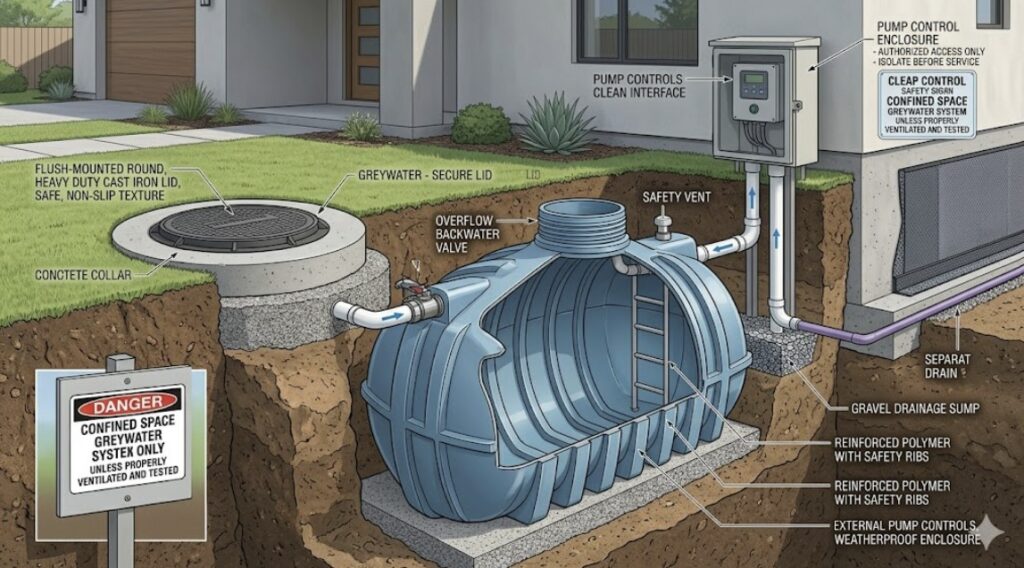
Most guidelines recommend:
- Less than 24 hours storage for untreated greywater
- Covered tanks
- Ventilation control
- Overflow protection
Treated greywater may be stored longer depending on system design.
health and safety guidelines for water reuse
What Cleaning Products Are Safe for Greywater Systems?
Soap and detergent selection directly affects soil and plant health.
Recommended Characteristics
| Use products that are: | Biodegradable Low sodium Low boron Phosphate-free Chlorine-free |
Harmful Ingredients
| Avoid: | Borax Sodium bleach Salt-heavy detergents Antibacterial chemicals |
Environmental Working Group (EWG) guide for cleaning products
Plant-Friendly Alternatives
Hydrogen peroxide bleach alternatives are generally safer than chlorine bleach.
Liquid soaps typically affect soil pH less than bar soaps.
How Much Water Can Residential Greywater Systems Save?
A major factor in how do residential greywater systems work to reduce costs is the total daily water output based on household size.
Average Household Greywater Production
| Source | Daily Output Per Person |
|---|---|
| Shower | 15–25 gallons |
| Laundry | 10–20 gallons |
| Bathroom sink | 3–5 gallons |
A four-person household may generate:
- 150–300 gallons of reusable greywater daily
- More than 50,000 gallons annually
This can offset substantial irrigation demand.
California Department of Water Resources conservation data
Residential Greywater System Costs
Installation costs vary dramatically based on complexity.
| System Type | DIY Cost | Professional Installation |
|---|---|---|
| Laundry-to-landscape | $150–$300 | $500–$1,500 |
| Branched drain | $200–$500 | $1,000–$3,000 |
| Pumped system | $400–$1,000 | $2,000–$6,000 |
| Advanced treatment system | $2,500–$10,000 | $7,000–$20,000 |
Beyond the installation cost, you should evaluate specific products like the Saniflo or Zoeller units we reviewed in our comprehensive [residential greywater recycling systems] guide.
Cost Factors
Major cost variables include:
- Excavation
- Plumbing retrofits
- Filtration complexity
- Tank size
- Pumping requirements
- Automation controls
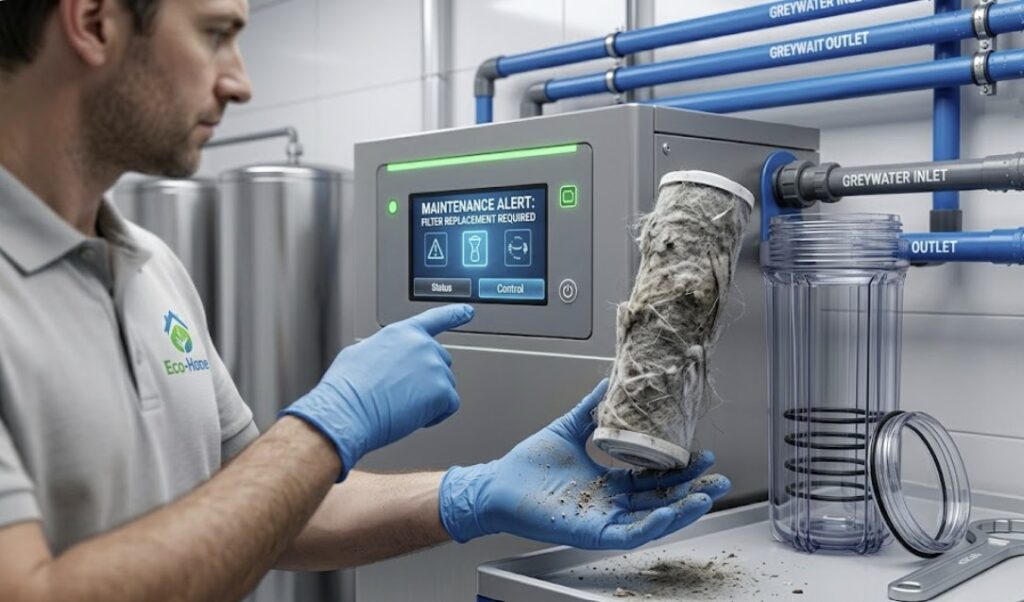
Maintenance Requirements for Residential Greywater Systems
Routine maintenance is critical for reliable operation.
Typical Maintenance Tasks
| Weekly | Monthly | Annually |
| Check filters Inspect pumps Monitor odors | Flush irrigation lines Inspect diverter valves Clean screens | Inspect tanks Service pumps Evaluate soil conditions |
Poor maintenance often causes:
- Pipe clogging
- Pump failure
- Soil saturation
- Odors
Greywater System Design Considerations
The environmental factors influencing how do residential greywater systems work mean that every property requires unique design adjustments.
Climate
| Cold climates require | Hot climates require |
| Freeze protection Insulated piping Indoor routing | Rapid water turnover Odor prevention Evaporation management |
Soil Type
Different soils absorb water differently.
| Soil Type | Drainage Performance |
|---|---|
| Sandy soil | Excellent |
| Loam | Good |
| Clay | Poor |
Poor drainage increases ponding risk.
Landscape Demand
The irrigation area must absorb expected greywater volume without runoff.
Residential Greywater Regulations and Permits
Greywater laws vary significantly by jurisdiction.
Some areas:
- Encourage greywater reuse
- Offer rebates
- Simplify permits
Other areas impose:
- Strict treatment standards
- Engineering requirements
- Limited reuse permissions
Before installation, homeowners should verify:
- Plumbing code requirements
- Health department rules
- Irrigation restrictions
- Backflow prevention standards
Advantages of Residential Greywater Systems
Residential greywater systems provide multiple environmental and financial benefits.
Major Benefits
- Lower water bills
- Reduced freshwater demand
- Reduced sewer loading
- Improved drought resilience
- Healthier landscaping
- Lower energy use for water treatment
Greywater also contains nutrients beneficial to many ornamental plants.
Common Problems With Residential Greywater Systems
Improperly designed systems can create operational issues.
Frequent Problems
| Problem | Cause |
|---|---|
| Bad odors | Stagnant storage |
| Pipe clogging | Hair and lint buildup |
| Soil saturation | Excess irrigation |
| Pump failure | Debris damage |
| Plant damage | Harmful detergents |
Most failures result from insufficient filtration or poor maintenance.
DIY vs Professional Greywater Installation
Simple systems can often be installed by experienced homeowners.
Suitable DIY Projects
- Laundry-to-landscape systems
- Basic gravity irrigation
- Rain barrel integration
Systems Requiring Professionals
- Indoor reuse systems
- Pressurized irrigation systems
- Advanced filtration
- MBR treatment systems
Professional design ensures compliance with local plumbing and health codes.
Future Trends in Residential Greywater Systems
Residential greywater technology continues evolving rapidly.
Emerging innovations include:
- Smart irrigation automation
- Real-time water quality monitoring
- Compact membrane filtration
- Integrated rainwater harvesting
- AI-controlled water reuse systems
Modern homes increasingly combine:
- Greywater recycling
- Rainwater harvesting
- Composting toilets
- Solar-powered pumping
Modern sustainable homes are now integrating [solar-powered pumping] with greywater recycling to achieve 100% utility independence.
This integrated approach significantly reduces dependence on municipal infrastructure.
Conclusion
Mastering the mechanics of how do residential greywater systems work allows homeowners to build truly resilient and water-independent properties. Whether using a simple laundry-to-landscape setup or an advanced membrane bioreactor system, greywater recycling reduces potable water demand while supporting resilient landscaping and lower utility costs.
The most effective residential greywater systems combine proper plumbing separation, safe filtration, appropriate irrigation methods, and consistent maintenance. By selecting the right system design for local climate, landscape needs, and household water usage, homeowners can achieve substantial long-term water savings while minimizing environmental impact.
Understanding the mechanics is the first step toward realizing the massive [greywater recycling benefits] available to modern homeowners.
How do residential greywater systems work in modern homes?
Residential greywater systems work by collecting lightly used water from showers, bathroom sinks, bathtubs, and washing machines before that water enters the sewer line. The system then filters or treats the greywater and redirects it toward non-potable applications such as landscape irrigation or toilet flushing. Most systems use gravity flow, pumps, filters, storage tanks, and diverter valves to safely manage water reuse while reducing freshwater consumption.
Are residential greywater systems safe for gardens and landscaping?
Residential greywater systems are generally safe for landscaping when homeowners use biodegradable soaps and low-sodium cleaning products. Greywater contains small amounts of organic matter and nutrients that can benefit trees, shrubs, and ornamental plants. Properly designed systems distribute water underground or beneath mulch layers to minimize human contact and prevent odors or runoff.
Can greywater be stored for long periods of time?
Untreated greywater should not be stored for more than 24 hours because bacteria and organic materials begin decomposing rapidly. Extended storage often causes unpleasant smells, sludge buildup, and microbial growth inside tanks and pipes. Advanced residential greywater systems with disinfection and filtration may allow longer storage periods depending on local regulations and treatment quality.
Do residential greywater systems reduce water bills?
A properly installed greywater recycling system can significantly lower household water bills by reducing dependence on municipal water supplies for irrigation and other non-potable uses. In dry regions where outdoor watering accounts for a large percentage of water consumption, homeowners often experience substantial savings throughout the year, especially during summer months and drought restrictions.
What is the difference between greywater and blackwater?
Greywater comes from relatively clean household sources such as showers, bathtubs, laundry machines, and bathroom sinks, while blackwater contains sewage from toilets and urinals. Blackwater requires full wastewater treatment because it carries dangerous pathogens and fecal contamination. Residential greywater systems are specifically designed to reuse only lightly contaminated water that can be treated more easily and safely.
How do residential greywater systems work with washing machines?
Laundry-based systems redirect washing machine discharge water through a diverter valve into irrigation tubing or filtration units instead of sending it to the sewer. Because washing machines already contain pumps, many laundry-to-landscape systems operate without requiring additional mechanical pumping equipment. This makes them one of the easiest and most affordable greywater solutions for homeowners.
Can greywater be used to flush toilets?
Yes, treated greywater can be reused for toilet flushing in many residential systems. These setups typically require additional plumbing modifications, filtration, and storage tanks to ensure the water remains safe and odor-free. Using greywater for toilet flushing can substantially reduce indoor potable water demand because toilets account for a significant percentage of daily household water use.
Do residential greywater systems smell bad?
Well-maintained greywater systems should not produce strong odors. Smells usually occur when water becomes stagnant, filters clog, or untreated greywater remains stored for too long. Proper ventilation, regular maintenance, adequate drainage, and rapid water reuse are essential for preventing odor issues in residential greywater systems.
Are greywater systems legal everywhere?
Greywater regulations vary widely depending on local plumbing codes, environmental rules, and public health requirements. Some regions actively encourage greywater reuse through rebates and simplified permits, while others impose strict limitations on installation and water reuse applications. Homeowners should always verify local requirements before beginning construction or modifications.
How much water can a family save with a greywater system?
An average household can recycle tens of thousands of gallons of water annually through a properly designed greywater system. Families with high laundry and shower usage often produce enough reusable water to meet most landscape irrigation needs throughout the year. Water savings increase further when systems are integrated with drought-resistant landscaping and efficient irrigation methods.
How do residential greywater systems work during winter?
In cold climates, residential greywater systems work by routing pipes through insulated spaces or underground areas protected from freezing temperatures. Some systems automatically divert water back to the sewer during freezing weather to prevent pipe damage. Advanced installations may include heat tracing, insulated tanks, or indoor irrigation options such as greenhouse watering systems.
Can greywater damage plants or soil?
Greywater can harm plants and soil if it contains excessive salts, boron, bleach, or harsh detergents. Continuous use of unsuitable cleaning products may lead to soil compaction, reduced plant growth, and chemical accumulation over time. Selecting plant-friendly soaps and rotating irrigation zones helps maintain healthy soil conditions and long-term landscape performance.
Do residential greywater systems require electricity?
Some greywater systems operate entirely through gravity and require no electricity, especially simple branched drain systems or laundry-to-landscape installations. More advanced systems with pumps, filtration units, ultraviolet sterilization, or automated controls do require electrical power to operate efficiently. System complexity usually determines overall energy consumption.
How often should greywater systems be maintained?
Greywater systems should be inspected regularly to ensure filters, pumps, valves, and irrigation lines remain clean and operational. Basic maintenance often includes removing lint, cleaning filters, checking for leaks, and monitoring irrigation zones for pooling or clogging. Routine maintenance greatly improves system lifespan and prevents costly repairs.
Can kitchen sink water be used in residential greywater systems?
Most residential greywater systems avoid using kitchen sink water because it contains grease, food particles, oils, and high bacterial loads. Some advanced treatment systems can process kitchen wastewater, but additional grease traps and filtration components are usually required. Simpler residential systems generally focus only on bathroom and laundry sources.
How do residential greywater systems work with drip irrigation?
Greywater drip irrigation systems filter wastewater before distributing it slowly through specialized underground emitters located near plant roots. These systems maximize water efficiency while minimizing evaporation and runoff. Because untreated greywater can clog standard drip emitters, high-quality filtration and greywater-compatible irrigation components are essential for reliable performance.
Are residential greywater systems environmentally friendly?
Greywater recycling reduces freshwater extraction, lowers wastewater discharge, decreases energy consumption at treatment plants, and supports sustainable landscaping practices. By reusing household water locally, residential greywater systems help conserve limited water resources while reducing pressure on aging municipal sewer infrastructure and stormwater systems.
What cleaning products are best for greywater systems?
The best products for greywater systems are biodegradable, phosphate-free, low-sodium, and low-boron soaps and detergents. Liquid cleaners are generally preferred because they tend to affect soil pH less than powdered products or traditional bar soaps. Plant-safe products protect irrigation zones while improving the long-term performance of residential greywater systems.
Can greywater systems increase home value?
In regions where water conservation is important, professionally installed greywater systems may increase property appeal and market value. Eco-conscious buyers often view sustainable water infrastructure as a long-term cost-saving feature, especially in drought-prone areas where water restrictions and rising utility costs are common concerns.
How do residential greywater systems work alongside rainwater harvesting systems?
Residential greywater systems work extremely well when combined with rainwater harvesting systems because both technologies reduce dependence on municipal water supplies. Rainwater can supplement irrigation and household non-potable uses during wet seasons, while greywater provides a more consistent year-round water source generated through everyday household activities.
Can greywater be used on vegetable gardens?
Greywater can sometimes be used on fruit trees and certain food-producing plants when applied below the soil surface and away from edible portions. Most regulations discourage spraying untreated greywater directly onto vegetables or root crops because of potential pathogen exposure. Subsurface irrigation methods provide the safest approach for food gardens.
What is the lifespan of a residential greywater system?
A well-maintained residential greywater system can last 15 to 30 years depending on system quality, environmental conditions, and maintenance frequency. Pumps, filters, and electronic components may require replacement earlier, while underground piping and storage tanks often remain operational for decades when properly installed and maintained.
How difficult is it to install a residential greywater system?
Simple laundry-to-landscape systems are relatively easy for experienced homeowners to install, while whole-house systems involving filtration, pumps, and indoor reuse applications usually require professional plumbing expertise. Installation complexity depends on home layout, local codes, irrigation needs, and the level of treatment required.
How do residential greywater systems work to reduce sewer system strain?
Residential greywater systems work by diverting reusable water away from municipal sewer infrastructure, reducing the total volume of wastewater requiring centralized treatment. Lower sewer demand helps decrease energy consumption at treatment plants, minimizes overflow risks during storms, and extends the lifespan of aging public wastewater infrastructure.
Are advanced greywater treatment systems worth the cost?
Advanced treatment systems are often worthwhile for homeowners seeking high water reuse capacity, indoor non-potable applications, or long-term water independence. Although installation costs are higher, these systems provide superior water quality, automation, and broader reuse opportunities compared to basic irrigation-only setups.
3 thoughts on “How Do Residential Greywater Systems Work? The 2026 Engineering Guide”