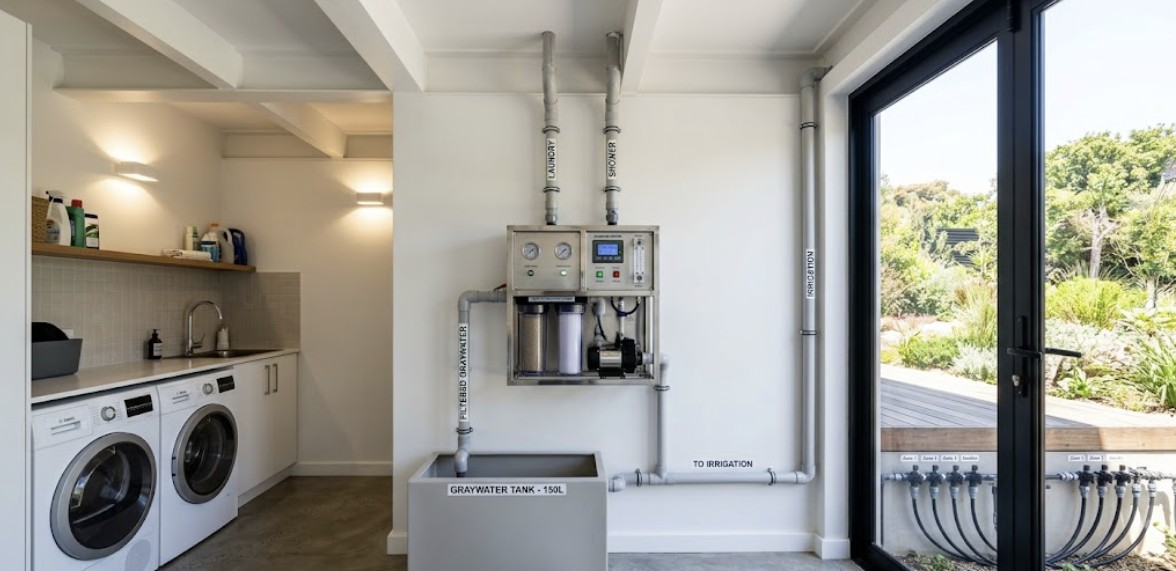
Water scarcity, rising utility costs, drought restrictions, and aging infrastructure are forcing homeowners and commercial property owners to rethink how water is used every day. One of the most effective solutions available today is greywater recycling. By capturing and reusing water from showers, bathtubs, laundry systems, and bathroom sinks, we can dramatically reduce freshwater consumption without sacrificing comfort or convenience.
Greywater systems are no longer niche sustainability projects. They are now practical, code compliant water management systems that lower utility bills, protect landscaping, reduce environmental impact, and improve long-term property resilience. The most important greywater recycling benefits extend beyond water savings alone they include sewer reduction, groundwater recharge, drought protection, improved irrigation efficiency, and long-term return on investment.
In this guide, we cover everything property owners need to know about greywater recycling systems, including installation methods, water savings data, treatment technologies, operating costs, maintenance requirements, regulations, and environmental advantages.
Table of Contents
What Is Greywater and How Does Greywater Recycling Work?
Greywater is lightly used wastewater generated from non-toilet household fixtures. Common greywater sources include:
- Showers
- Bathtubs
- Bathroom sinks
- Washing machines
- Laundry tubs
Greywater does not include toilet wastewater, kitchen sink discharge, or dishwasher waste. Those sources are classified as blackwater because they contain higher concentrations of pathogens, grease, oils, and organic contaminants.
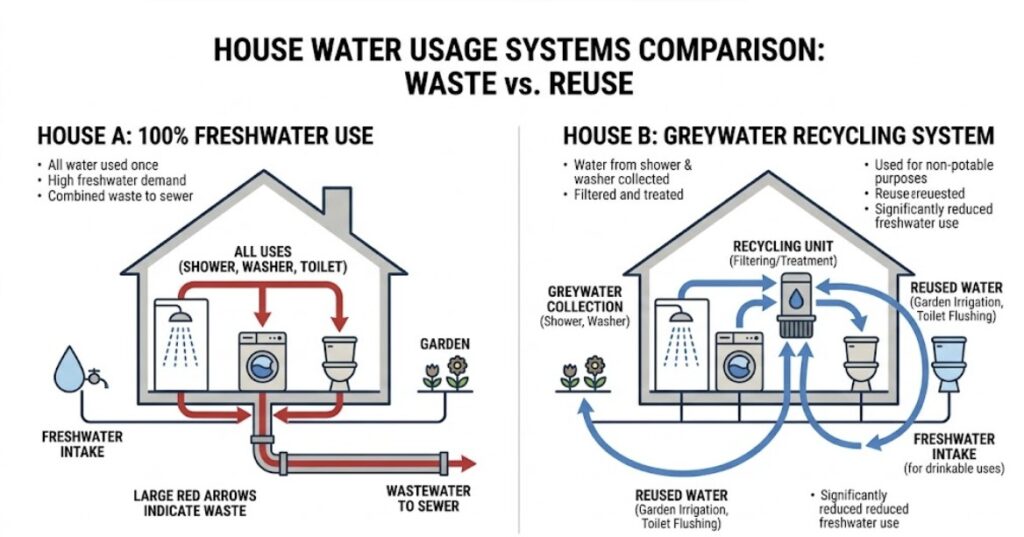
A greywater recycling system captures reusable wastewater before it enters the sewer line. The system filters, redirects, and distributes the water for approved non-potable applications such as:
- Landscape irrigation
- Toilet flushing
- Decorative landscaping
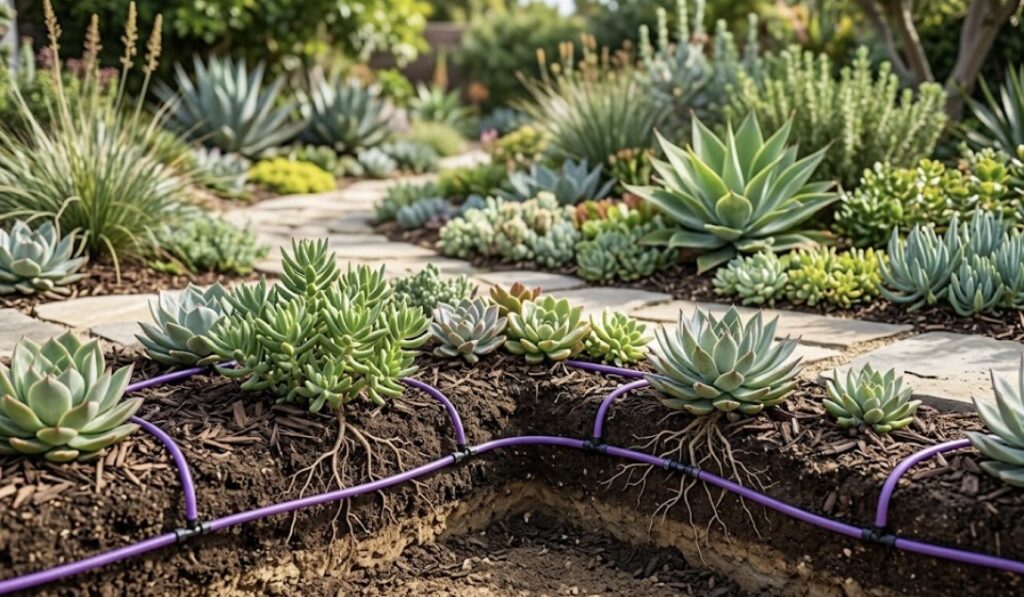
- Subsurface drip irrigation
- Groundwater recharge systems
The process typically includes:
- Water collection
- Filtration
- Basic treatment
- Distribution
- Controlled reuse
For a more technical breakdown of the hydraulic stages and diversion valves, see our engineering guide on [how do residential greywater systems work].
Why Greywater Recycling Is Becoming Essential
Freshwater demand is increasing globally while climate variability continues to strain municipal systems. Residential outdoor irrigation alone accounts for a substantial percentage of household water consumption.
Greywater reuse directly addresses several modern infrastructure challenges:
| Challenge | Greywater Solution |
|---|---|
| Rising water bills | Reduces potable water demand |
| Drought restrictions | Supplies alternative irrigation water |
| Sewer overload | Decreases wastewater discharge |
| Landscape maintenance costs | Provides sustainable irrigation |
| Groundwater depletion | Supports localized recharge |
| Water scarcity | Extends usable household water |
Many households can reduce potable water usage by 20% to 50% depending on climate, occupancy, irrigation demand, and system design.
Greywater Recycling Benefits for Homeowners
The most significant greywater recycling benefits combine financial savings with environmental performance. Modern systems deliver measurable reductions in water usage while supporting healthier landscaping and reducing strain on infrastructure.
Major Household Benefits Include
- Reduced monthly water bills
- Lower sewer charges
- Sustainable irrigation supply
- Increased drought resilience
- Reduced freshwater dependence
- Improved septic system longevity
- Lower environmental footprint
- Greater property sustainability value
Significant Water Conservation
Water conservation remains the primary reason homeowners install greywater systems.
A typical family generates hundreds of gallons of reusable greywater every week through routine activities like showering and laundry. Instead of sending that water directly to municipal treatment facilities, greywater systems redirect it for productive reuse.
Average Greywater Production by Source
| Source | Average Daily Volume |
|---|---|
| Shower | 20–40 gallons per person |
| Bathtub | 30–50 gallons |
| Bathroom sink | 5–10 gallons |
| Washing machine | 15–40 gallons per load |
Combined household greywater generation often represents 50–80% of indoor wastewater output.
According to the [Department of Energy’s guide on home water efficiency], a well-implemented greywater system can allow a household to reuse up to 60% of its total water output.
This creates a substantial opportunity for reuse.
Estimated Annual Water Savings
| Household Size | Estimated Annual Savings |
|---|---|
| 2 people | 15,000–25,000 gallons |
| 4 people | 30,000–40,000 gallons |
| 6 people | 45,000+ gallons |
In drought-prone regions, these savings become especially valuable.
Lower Utility Bills and Long-Term Savings
One of the strongest greywater recycling benefits is long-term financial reduction in utility expenses.
Water utilities typically charge for:
- Potable water supply
- Sewer treatment
- Stormwater infrastructure
- Wastewater processing
Greywater systems reduce both water consumption and sewer discharge.
How Savings Accumulate
| Cost Area | Reduction Potential |
|---|---|
| Irrigation water | High |
| Sewer discharge fees | Moderate to high |
| Septic maintenance | Moderate |
| Landscape replacement | Moderate |
Homes with large lawns or extensive landscaping often see the fastest financial returns.
Typical System Cost Ranges
| System Type | Approximate Cost |
|---|---|
| Laundry-to-landscape | $150–$1,500 |
| Gravity-fed diversion | $500–$3,000 |
| Pumped irrigation system | $2,000–$6,000 |
| Advanced treatment system | $5,000–$15,000+ |
While costs vary, selecting the right hardware is key to ROI. We reviewed the top filtration units in our guide to [residential greywater recycling systems].
Return on investment depends heavily on:
- Local water prices
- Irrigation demand
- Climate
- System complexity
- Maintenance efficiency
Greywater Recycling Benefits for Landscaping
Outdoor irrigation consumes enormous amounts of potable water. Greywater systems dramatically improve irrigation sustainability while maintaining healthy landscapes.
Why Greywater Helps Plants
Greywater often contains trace nutrients from soaps and organic particles, including:
- Nitrogen
- Phosphorus
- Potassium
- Organic matter
These compounds can support soil biology and plant growth when appropriate biodegradable products are used.
Best Uses for Greywater Irrigation
- Ornamental gardens
- Trees
- Shrubs
- Lawns
- Native landscaping
- Drought-tolerant plants
Plants to Avoid
Untreated greywater should generally not contact:
- Root vegetables
- Leafy greens
- Edible plant surfaces
- Hydroponic systems
Reduced Pressure on Municipal Sewer Systems
Municipal wastewater infrastructure is expensive to maintain and expand. Every gallon diverted through greywater reuse reduces system strain.
Infrastructure Advantages
Greywater diversion helps:
- Reduce wastewater treatment loads
- Lower sewer overflow risks
- Decrease energy consumption at treatment plants
- Minimize infrastructure expansion costs
- Improve resilience during storms
Communities facing aging sewer infrastructure increasingly encourage decentralized water reuse systems because they reduce centralized demand.
Environmental Advantages of Greywater Reuse
The environmental value of greywater recycling extends far beyond simple conservation.
Key Ecological Benefits
| Reduced Freshwater Extraction | Greywater systems decrease dependence on rivers, reservoirs, and groundwater aquifers. |
| Lower Energy Consumption | Water treatment and pumping require significant energy. Reusing water locally reduces energy-intensive processing. Reducing the energy needed for water treatment is a pillar of modern independence. If you are aiming for a zero-utility home, check our [complete off-grid power blueprint for retreat cabins]. |
| Improved Groundwater Recharge | Subsurface irrigation allows water to slowly infiltrate soil profiles rather than being lost to storm drains. |
| Reduced Surface Water Pollution | Lower sewer discharge volumes reduce pollution risks during heavy rainfall events. |
| Support for Circular Water Use | Greywater systems contribute to decentralized water recycling and sustainable resource management. |
Greywater Recycling Benefits During Drought Conditions
Drought resilience is one of the fastest-growing reasons for system adoption. This decentralized approach aligns with the [EPA’s WaterSense program] standards for reducing strain on local water infrastructure during periods of high environmental stress.
During municipal watering restrictions, many regions permit limited greywater irrigation because recycled household water reduces dependence on public supply systems.
Drought Benefits Include
- Landscape preservation
- Reduced irrigation restrictions
- Emergency water resilience
- Improved soil moisture retention
- Reduced plant replacement costs
In arid climates, greywater systems can sustain landscaping even during severe restrictions.

Types of Greywater Recycling Systems
Not all greywater systems operate the same way. System selection depends on budget, property size, local regulations, and intended reuse applications.
Simple Diversion Systems
These systems redirect water directly to irrigation zones with minimal filtration.
| Advantages | Limitations |
| Low cost Minimal maintenance Easy installation Low energy usage | Limited treatment Restricted applications No long-term storage |
Laundry-to-Landscape Systems
Laundry greywater systems remain among the most popular residential options.
They divert washing machine discharge into mulch basins or drip systems.
| Benefits | Affordable Highly efficient No major plumbing modifications Excellent for retrofits |
The 3-way diverter valve is the heart of any L2L system. Avoid cheap plastic ball valves that seize up after a season. For residential builds, the [Jandy 3-Port Diverter Valve] is the industry standard; its CPVC construction handles the heat from washing machine cycles without warping, ensuring you can switch back to the sewer line effortlessly during the winter.
Branched Drain Systems
These gravity-fed systems distribute greywater evenly across landscaping areas.
| Best For | Sloped properties Passive irrigation Low-maintenance systems |
Advanced Treatment Systems
Advanced systems filter and disinfect greywater for broader reuse applications.
Possible Uses
- Toilet flushing
- Commercial irrigation
- Multi-family housing
- Large properties
Treatment Technologies
| Technology | Function |
|---|---|
| Sand filtration | Removes solids |
| Biofiltration | Biological treatment |
| Membrane filtration | Fine contaminant removal |
| UV disinfection | Pathogen reduction |
| Activated carbon | Chemical adsorption |
Greywater System Maintenance Requirements
Proper maintenance is critical for safe and efficient operation.
Routine Maintenance Tasks
- Cleaning filters
- Inspecting valves
- Checking pumps
- Monitoring irrigation flow
- Preventing standing water
- Inspecting for odors
To prevent siphoning and “gurgling” in your diversion lines, always ensure your Air Admittance Valve is clear. If you are building a new setup, the [Oatey Sure-Vent] is a reliable choice to maintain proper pressure balance in the greywater lines, preventing odors from backing up into the house.
Maintenance Frequency
| Component | Typical Maintenance |
|---|---|
| Filter screens | Weekly to monthly |
| Pumps | Quarterly |
| Irrigation lines | Seasonal |
| Tanks | Annual |
| Treatment units | Per manufacturer schedule |
Neglected systems can develop:
- Odors
- Bacterial growth
- Clogging
- Reduced irrigation performance
Greywater Storage Rules and Safety
Untreated greywater should generally not be stored for more than 24 hours.
After extended storage:
- Bacteria multiply rapidly
- Odors develop
- Water quality declines
- Health risks increase
For long-term storage, advanced treatment and disinfection are necessary.
Important Safety Guidelines
- Avoid human contact with untreated greywater
- Use subsurface irrigation whenever possible
- Prevent runoff into neighboring properties
- Clearly label system components
- Install backflow prevention devices
Choosing Greywater-Safe Soaps and Detergents
Soap selection strongly influences system performance and plant safety.
| Avoid Products Containing | Boron Sodium salts Chlorine bleach Harsh surfactants Antibacterial additives |
| Recommended Products | Biodegradable detergents Plant-safe soaps Low-sodium cleaners Phosphate-free products |
If you are looking for a “set-and-forget” option that won’t require you to constantly monitor soil pH, I personally recommend [Oasis Biocompatible Laundry Detergent]. Unlike standard “eco-friendly” soaps that still contain high sodium levels, this formula breaks down into plant nutrients (nitrogen and potash), essentially fertilizing your garden while you wash
Greywater Recycling Benefits for Septic Systems
Homes using septic tanks gain additional advantages from greywater diversion.
Benefits for Septic Longevity
Reducing water volume entering septic systems:
- Lowers hydraulic stress
- Improves solids separation
- Extends drain field life
- Reduces pumping frequency
Greywater diversion can substantially extend the lifespan of septic infrastructure.
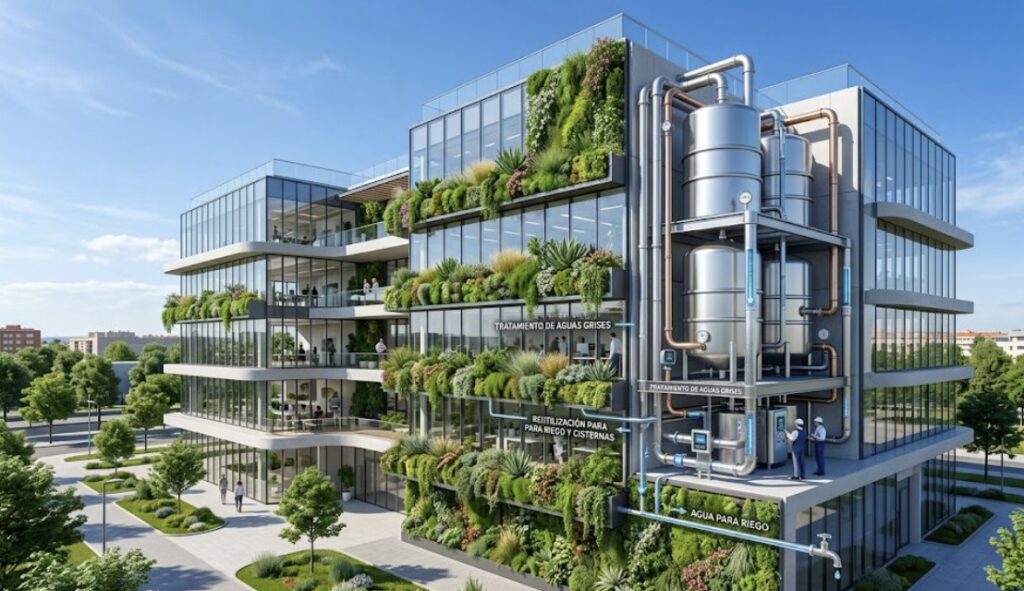
Commercial Applications of Greywater Recycling
Greywater reuse is increasingly common in:
- Hotels
- Apartment buildings
- Office complexes
- Schools
- Shopping centers
- Industrial campuses
Commercial Reuse Applications
| Application | Benefit |
|---|---|
| Toilet flushing | Major water reduction |
| Cooling towers | Reduced potable demand |
| Irrigation | Landscape sustainability |
| Industrial cleaning | Lower operating costs |
Large commercial properties often achieve faster payback periods due to higher water consumption volumes.
Greywater Regulations and Permits
Greywater regulations vary significantly between jurisdictions.
Some regions permit simple systems without permits, while others require:
- Plumbing inspections
- Engineering review
- Health department approval
- Water quality testing
Typical Regulatory Requirements
- Separate plumbing lines
- Approved irrigation methods
- Backflow prevention
- Labeling requirements
- Setback distances
- Overflow protection
Always verify local regulations before installation.
Comparing Greywater Systems and Rainwater Harvesting
Many sustainable homes combine both systems for maximum resilience.
Greywater vs Rainwater
| Feature | Greywater | Rainwater |
|---|---|---|
| Reliability | Daily supply | Seasonal |
| Treatment need | Moderate | Variable |
| Installation cost | Moderate | Moderate |
| Irrigation value | Excellent | Excellent |
| Indoor reuse | Possible | Possible |
Greywater offers more predictable year-round water generation because it depends on household activity rather than rainfall.
Potential Drawbacks and Limitations
Although greywater recycling benefits are substantial, systems do have limitations.
Common Challenges
- Upfront installation costs
- Permit complexity
- Maintenance requirements
- Soap compatibility issues
- Climate-related limitations
- Plumbing retrofits in older homes
However, most disadvantages are manageable with proper design and professional installation.
Future Trends in Greywater Recycling
Greywater reuse is becoming a major component of sustainable construction and water policy.
The integration of AI-managed water and energy is the future. This works best when following an efficient [12V vs 24V vs 48V solar system] architecture to power smart home sensors.
Emerging Innovations
- Smart irrigation controls
- Automated filtration systems
- Integrated home water management
- Real-time water quality sensors
- Energy-efficient treatment systems
As freshwater costs rise globally, decentralized reuse systems will likely become standard practice in both residential and commercial development.
How to Decide if a Greywater System Is Worth It
Greywater systems provide the highest value when properties have:
- High irrigation demand
- Expensive water rates
- Drought exposure
- Large households
- Septic systems
- Sustainability goals
Ideal Candidate Properties
| Property Type | Suitability |
|---|---|
| Single-family homes | Excellent |
| Eco-homes | Excellent |
| Multi-family buildings | High |
| Commercial landscapes | High |
| Small apartments | Moderate |
Final Thoughts on Greywater Recycling Benefits
Greywater recycling offers one of the most practical and scalable solutions for reducing water waste while improving sustainability. The long-term greywater recycling benefits include lower utility bills, drought resilience, healthier landscaping, reduced sewer loads, improved resource efficiency, and stronger environmental stewardship.
Modern systems range from simple laundry diversion setups to highly engineered treatment systems capable of supporting large residential and commercial properties. With increasing water scarcity, rising utility costs, and growing pressure on infrastructure, greywater reuse is rapidly shifting from optional sustainability upgrade to essential water management strategy.
Homeowners and businesses that invest in greywater systems today position themselves for lower operating costs, improved water security, and long-term environmental resilience.
What are the main greywater recycling benefits for homeowners?
The main greywater recycling benefits for homeowners include lower water bills, reduced outdoor water consumption, sustainable irrigation, decreased strain on septic or sewer systems, and improved drought resilience. By reusing water from showers, sinks, and washing machines, households can significantly reduce dependence on municipal water supplies while maintaining healthy landscaping and improving overall water efficiency.
How much water can a greywater recycling system save annually?
A properly designed greywater recycling system can save between 15,000 and 40,000 gallons of potable water annually depending on household size, irrigation needs, and water usage habits. Homes with large families, extensive landscaping, or high laundry usage generally achieve the highest water savings and fastest return on investment.
Are greywater recycling systems safe for gardens and landscaping?
Greywater recycling systems are generally safe for lawns, trees, shrubs, and ornamental plants when biodegradable and low-salt cleaning products are used. Proper filtration and subsurface irrigation methods help prevent human contact while allowing plants to benefit from nutrients naturally found in greywater, including trace organic matter and minerals.
Can greywater be used for vegetable gardens?
Greywater should not directly contact edible portions of vegetables, especially leafy greens and root crops. In some cases, treated greywater may be used safely around fruit trees or non-edible landscaping, but untreated greywater is best reserved for ornamental gardens, shrubs, and lawn irrigation to minimize contamination risks.
Do greywater recycling benefits include lower sewer bills?
Yes, one of the most valuable greywater recycling benefits is reduced sewer discharge. Since less wastewater enters municipal sewer systems, homeowners often see lower wastewater treatment charges in addition to reduced freshwater consumption costs, creating long-term financial savings on utility bills.
What types of water are considered greywater?
Greywater typically includes wastewater from showers, bathtubs, bathroom sinks, and washing machines. Water from toilets, kitchen sinks, and dishwashers is generally excluded because it contains higher levels of grease, food waste, oils, and pathogens that require more intensive treatment.
How expensive is a greywater recycling system?
Greywater system costs vary widely depending on complexity, plumbing modifications, treatment technology, and irrigation design. Simple laundry-to-landscape systems may cost only a few hundred dollars, while advanced treatment systems designed for indoor reuse can cost several thousand dollars including installation and permits.
Can greywater recycling systems work in cold climates?
Greywater systems can work effectively in cold climates when properly insulated and designed to prevent freezing. Some systems include seasonal bypass valves that redirect water back to the sewer during freezing temperatures, while advanced systems may incorporate heated components or indoor treatment units for year-round operation.
Do greywater recycling benefits increase property value?
Eco-friendly upgrades such as greywater recycling systems can increase property appeal and long-term value, especially in drought-prone regions where water conservation is important. Buyers increasingly look for sustainable home features that reduce operating costs and improve environmental performance.
Is greywater safe for pets and children?
Untreated greywater should not be used in areas where pets or children may have direct contact with standing water or irrigation runoff. Properly installed systems use subsurface irrigation or controlled distribution methods that minimize exposure and reduce potential health risks associated with bacteria or contaminants.
Can a greywater system help during drought restrictions?
One of the most important greywater recycling benefits is improved drought resilience. Many municipalities allow limited greywater irrigation even during watering restrictions because recycled household water reduces demand on public water supplies and supports sustainable landscape maintenance.
How often do greywater systems require maintenance?
Most residential greywater systems require regular but manageable maintenance including filter cleaning, pump inspection, and irrigation line checks. Simpler systems may only need monthly inspection, while advanced treatment systems often require scheduled servicing to maintain water quality and operating efficiency.
What cleaning products should be avoided with greywater systems?
Products containing boron, sodium salts, chlorine bleach, antibacterial additives, and harsh surfactants should generally be avoided because they may damage plants, reduce soil health, and interfere with biological treatment processes. Biodegradable and low-sodium products are usually recommended for greywater reuse applications.
Can greywater be stored for later use?
Untreated greywater should typically be used within 24 hours because bacteria and odors develop quickly during storage. Advanced treatment systems with filtration and disinfection may allow longer storage periods, but most residential systems are designed for immediate irrigation or direct reuse.
What are the environmental greywater recycling benefits?
Environmental greywater recycling benefits include reduced freshwater extraction, lower wastewater discharge, decreased energy consumption at treatment facilities, improved groundwater recharge, and reduced pollution entering rivers and lakes. Greywater reuse also supports sustainable water management and circular resource conservation practices.
Do greywater systems require permits?
Permit requirements vary depending on local plumbing codes and environmental regulations. Some regions allow simple residential systems without permits, while others require inspections, engineering review, or water quality controls before installation approval is granted.
Can greywater systems reduce septic tank problems?
Greywater diversion reduces the volume of water entering septic systems, which lowers hydraulic stress and extends septic tank and drain field lifespan. This can reduce maintenance costs, improve treatment performance, and decrease the likelihood of septic system overload or premature failure.
What is the difference between greywater and rainwater harvesting?
Greywater comes from indoor household activities like showering and laundry, while rainwater harvesting collects precipitation from rooftops and other surfaces. Greywater systems provide a more reliable year-round water source because they depend on daily household water use rather than seasonal rainfall patterns.
Are advanced greywater treatment systems worth the investment?
Advanced greywater systems may be worthwhile for large households, commercial properties, or areas with expensive water rates and severe drought conditions. Although installation costs are higher, the long-term greywater recycling benefits often include substantial water savings, improved reuse flexibility, and increased sustainability performance.
Can apartment buildings use greywater recycling systems?
Apartment complexes are excellent candidates for greywater reuse because they generate large volumes of reusable water daily. Treated greywater can often be reused for toilet flushing, landscaping, and cooling systems, significantly reducing overall building water consumption and operating costs.
How does greywater help sustainable landscaping?
Greywater provides a reliable irrigation source that supports healthy landscaping without relying entirely on potable water. Many plants benefit from trace nutrients found in greywater, and subsurface irrigation systems help reduce evaporation while improving soil moisture retention.
Can greywater recycling systems reduce groundwater depletion?
Yes, one of the major greywater recycling benefits is reduced demand on groundwater resources. By reusing household water for irrigation and non-potable applications, communities can decrease pressure on aquifers and improve long-term water sustainability.
What is the lifespan of a greywater recycling system?
A well-maintained greywater system can last 15 to 30 years depending on materials, system complexity, climate conditions, and maintenance frequency. Pumps, filters, and mechanical components may require replacement over time, but most plumbing infrastructure remains durable for decades.
Can commercial buildings benefit from greywater recycling?
Commercial properties often experience some of the greatest greywater recycling benefits because of their high water usage volumes. Hotels, schools, office buildings, and shopping centers can significantly reduce utility costs through greywater reuse for toilet flushing, irrigation, and cooling applications.
Do greywater systems use electricity?
Simple gravity-fed greywater systems may operate without electricity, while advanced systems often require pumps, filtration equipment, and automated controls. Energy-efficient designs help minimize operating costs while maintaining effective water treatment and distribution performance.
Why are greywater recycling benefits becoming more important worldwide?
Growing populations, climate change, water scarcity, aging infrastructure, and rising utility costs are making water conservation increasingly important across the world. Greywater recycling offers a practical and scalable solution that reduces freshwater demand while improving long-term sustainability and environmental resilience.
4 thoughts on “Greywater Recycling Benefits: The Ultimate 2026 Homeowner ROI Guide”