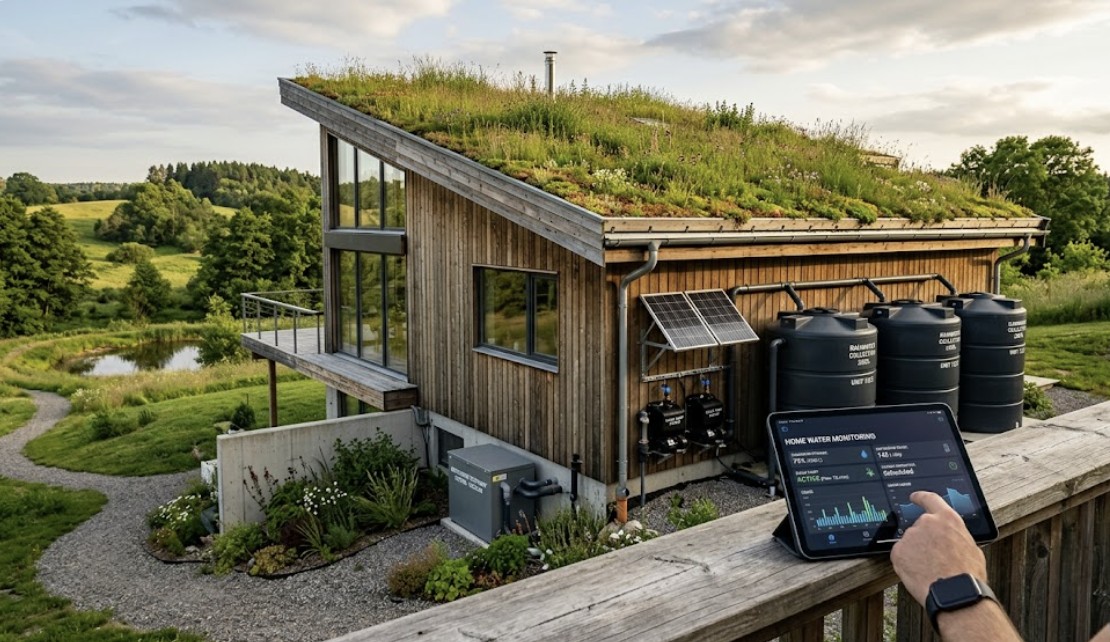
Water scarcity, aging infrastructure, rising utility costs, and climate instability are forcing governments, businesses, and homeowners to rethink how water is sourced, treated, reused, and protected. Sustainable water systems have emerged as the most effective long-term solution because they reduce dependence on centralized infrastructure while maximizing efficiency, recycling, resilience, and environmental protection.
From off-grid rainwater harvesting systems to advanced greywater recycling and atmospheric water generation, modern sustainable water systems are transforming how communities secure safe drinking water and manage wastewater. This shift reflects the global standards set by the [United Nations Sustainable Development Goal 6], which prioritizes the expansion of water recycling and decentralized management to combat global scarcity. These systems are now essential for residential developments, industrial facilities, agriculture, remote operations, eco-resorts, schools, and smart cities.
This guide explains exactly what sustainable water systems are, how they work, their core technologies, real-world applications, cost-saving benefits, design principles, and the future of decentralized water infrastructure.
Table of Contents
What Are Sustainable Water Systems?
Sustainable water systems are integrated water management solutions designed to conserve freshwater resources, reduce waste, recycle water efficiently, and maintain long-term environmental balance.
Unlike traditional water infrastructure that depends heavily on centralized treatment plants and extensive pipelines, sustainable water systems focus on localized, decentralized, and circular water management.
A sustainable water system typically includes:
- Water conservation technologies
- Rainwater harvesting
- Greywater recycling
- Blackwater treatment
- Smart leak detection
- Stormwater management
- Renewable-energy-powered water treatment
- Water reuse infrastructure
- Net zero water design
- Decentralized off-grid water production
The primary goal is to minimize potable water consumption while maximizing water recovery, reuse, and environmental resilience.
Core Components of Sustainable Water Systems
1. Water Collection Systems
Water collection is the foundation of sustainable water infrastructure.
Common collection methods include:
| Collection Method | Primary Use | Sustainability Benefit |
|---|---|---|
| Rainwater harvesting | Potable and non-potable use | Reduces municipal demand |
| Atmospheric water generation | Drinking water production | Eliminates trucking and bottled water |
| Stormwater capture | Irrigation and groundwater recharge | Prevents runoff pollution |
| Surface water intake | Agricultural and industrial use | Supports local sourcing |
| Groundwater wells | Residential supply | Reduces centralized dependency |
2. Water Treatment Technologies
Collected water must undergo purification before use.
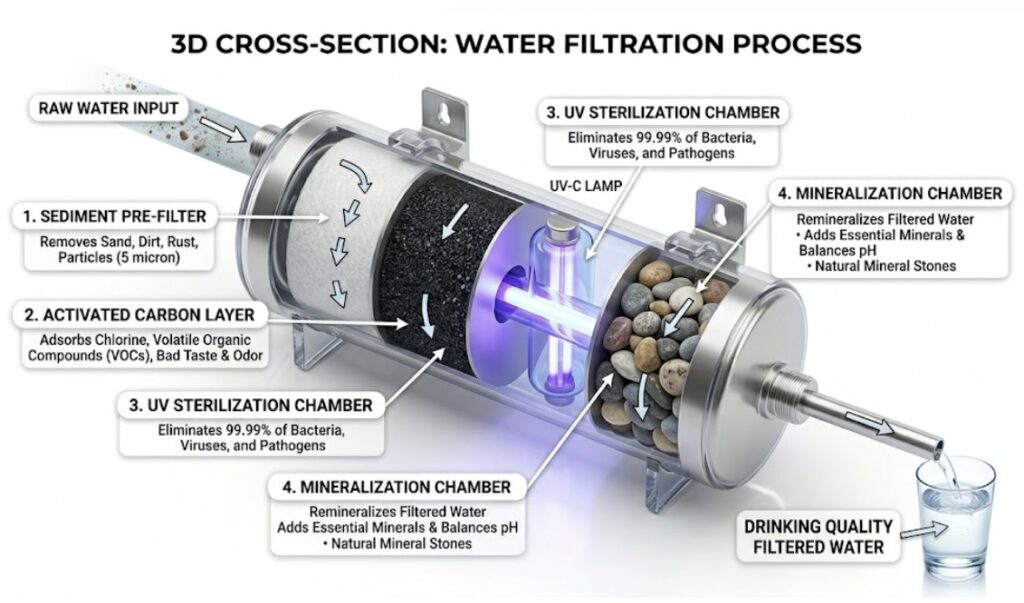
Common treatment stages include:
- Sedimentation
- Carbon filtration
- UV disinfection
- Reverse osmosis
- Mineralization
- Ozone treatment
- Biological treatment
Advanced sustainable water systems often combine several treatment methods to achieve potable standards.
3. Water Reuse and Recycling
Water reuse is one of the defining characteristics of sustainable water systems.
There are two primary recycling categories:
Greywater Recycling
Greywater comes from:
- Showers
- Bathroom sinks
- Laundry machines
- Bathtubs
While the concept is simple, the implementation requires a specific plumbing architecture. You can see the full breakdown of collection and diversion stages in our guide on [how do residential greywater systems work].
After treatment, greywater can be reused for:
- Toilet flushing
- Irrigation
- Cooling systems
- Landscape watering
Blackwater Recycling
Blackwater includes wastewater from:
- Toilets
- Kitchen drains
- Industrial discharge
Advanced treatment systems can safely recycle blackwater for non-potable applications and, in some systems, indirect potable reuse.
How Sustainable Water Systems Work
A sustainable water system operates through a circular water cycle instead of the traditional linear “use-and-dispose” approach.
This closed-loop approach dramatically reduces water waste while improving resilience during droughts and infrastructure disruptions.
Types of Sustainable Water Systems
Off-Grid Water Systems
Off-grid water systems operate independently from municipal infrastructure.
These systems are commonly used in:
- Rural homes
- Eco-tourism resorts
- Construction sites
- Mining operations
- Remote military bases
- Disaster relief zones
A complete off-grid system generally includes:
| Component | Function |
|---|---|
| Rainwater collection | Captures rainfall |
| Water storage cisterns | Stores collected water |
| Filtration systems | Removes contaminants |
| Solar pumps | Powers water distribution. Sizing your pump’s energy draw is critical. If you are building in a remote area, consult our [complete off-grid power blueprint for retreat cabins] to balance your solar harvest with your water filtration needs. |
| Greywater recycling | Reduces freshwater demand. Integrating recycling into a remote property is the most effective way to achieve true independence. For those starting their journey, our [residential greywater recycling systems] guide provides a perfect entry point for 2026 homeowners. |
| Composting or septic systems | Handles wastewater |
Benefits of Off-Grid Sustainable Water Systems
- Energy independence. Check [24V solar system wiring diagram]
- Reduced utility costs
- Water security during shortages
- Lower environmental impact
- Minimal infrastructure dependency
- Resilience during disasters
The Architect’s Safety Favor: Filtration removes dirt; UV kills pathogens. For any sustainable water system that aims for potability, the [HQUA UV Purifier] is non-negotiable. In 2026, we don’t rely on chemicals like chlorine that ruin the environment. This stainless steel chamber uses UVC light to scramble the DNA of 99.99% of bacteria and viruses (like E. coli or Giardia) that often hide in rainwater tanks. It’s the essential safety layer that turns “captured water” into “drinking water.”
Check current price on Amazon –>
Rainwater Harvesting Systems
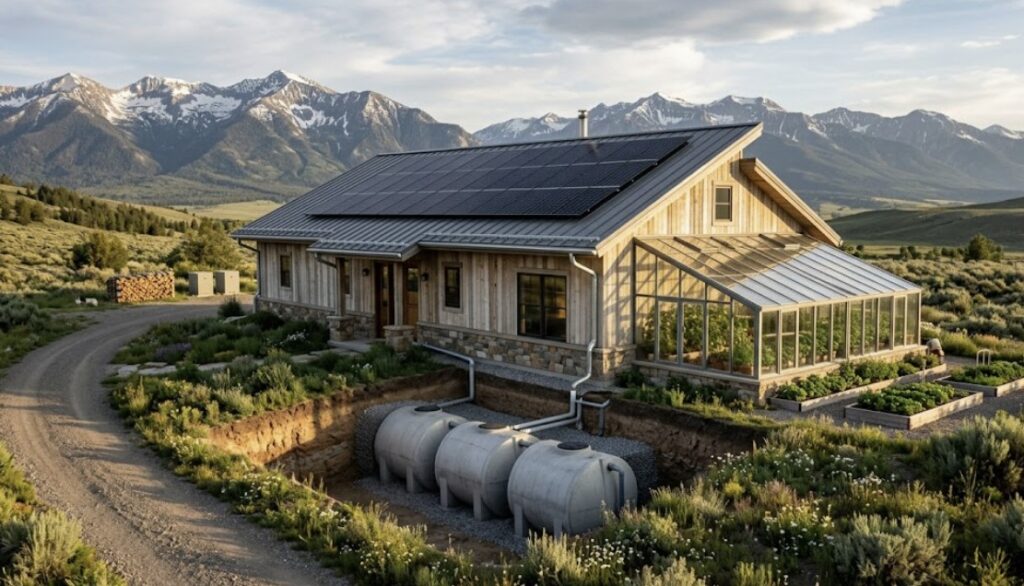
Rainwater harvesting is one of the most cost-effective sustainable water systems available.
The system works by collecting runoff from rooftops and directing it into storage tanks.
You can collect all the rain you want, but if you don’t strip out the sediment and organic “roof tea” before it hits your pipes, your system will fail. I specify the [iSpring WGB32B 3-Stage System]. It’s the industry workhorse for 2026. With a 5-micron sediment filter followed by two carbon block filters, it removes 95% of sediment, chlorine, and odors. It’s the “favor” that protects your expensive appliances and ensures the water in your tanks stays clear and usable for years.
Check current price on Amazon –>
Rainwater Harvesting Yield Formula
V=R×A×CWhere:
- V = water volume collected
- R = rainfall
- A = roof area
- C = collection efficiency coefficient
A 2,000-square-foot roof can collect thousands of gallons annually depending on rainfall patterns.
Advantages
- Reduces stormwater runoff
- Lowers water bills
- Supports irrigation
- Provides emergency water reserves
- Decreases municipal demand
Atmospheric Water Generation Systems
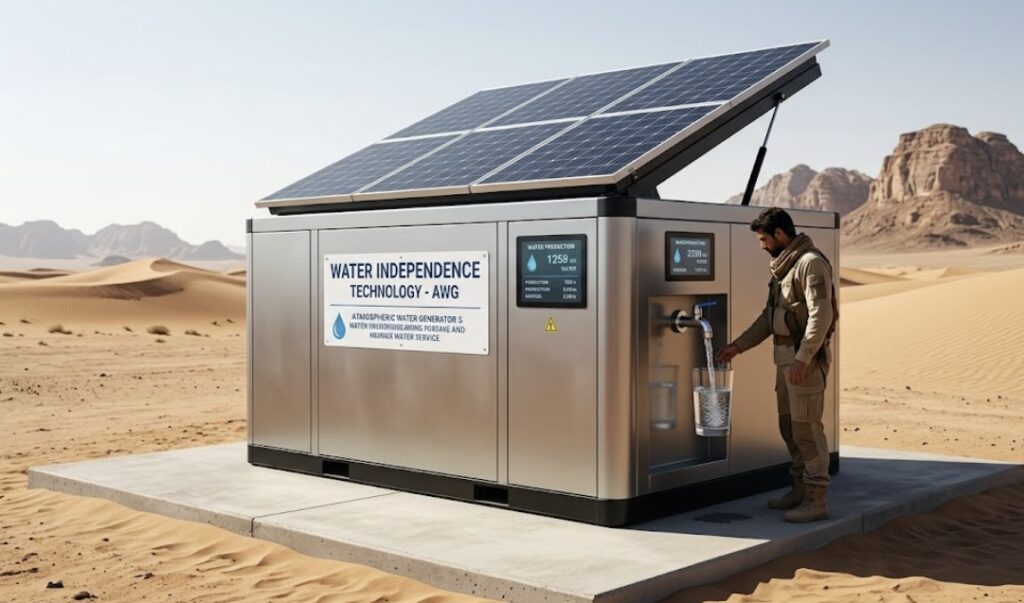
Atmospheric water generators (AWGs) produce drinking water directly from air humidity through condensation technology.
These systems are increasingly used in water-scarce environments where traditional water sources are unavailable.
How Atmospheric Water Systems Work
- Humid air enters the system
- Cooling coils condense moisture
- Water droplets are collected
- Multi-stage filtration purifies water
- Mineralization improves taste and quality
- Water is stored for use
Advantages of Atmospheric Water Systems
| Advantage | Impact |
|---|---|
| No pipelines required | True off-grid capability |
| Reduces bottled water dependence | Less plastic waste |
| Solar compatibility | Low carbon footprint |
| Portable deployment | Ideal for remote locations |
| Minimal groundwater extraction | Protects aquifers |
Greywater Recycling Systems
Greywater systems significantly reduce freshwater consumption in residential and commercial buildings.
Water Savings Potential
| Building Type | Potential Water Savings |
|---|---|
| Residential homes | 30–50% |
| Hotels | 40–60% |
| Office buildings | 25–45% |
| Industrial facilities | 20–70% |
Net Zero Water Systems
Net zero water systems balance total water consumption with water captured, reused, or returned to the environment.
A building reaches net zero water status when:
Wb=P−(A+R)≤0Where:
- Wb = water balance
- P = potable water consumed
- A = alternative water used
- R = water returned to source
In a sustainable water cycle, “hope” is not a strategy. You need to know exactly how many gallons you have left. I recommend the [Mictlan Ultrasonic Tank Monitor]. Instead of climbing a ladder to peek inside a dark tank, this sensor uses sound waves to give you a precise reading on a wireless screen inside your home. It even alerts you to low levels so you can adjust your consumption before you run dry. It’s the “brain” of a truly smart, sustainable water system.
Check current price on Amazon –>
Key Net Zero Strategies
- Rainwater harvesting
- Onsite wastewater treatment
- Smart water monitoring
- Water-efficient fixtures
- Native landscaping
- Groundwater recharge systems
Industrial Sustainable Water Systems
Industrial operations consume enormous volumes of water for:
- Cooling
- Cleaning
- Manufacturing
- Processing
- Boiler systems
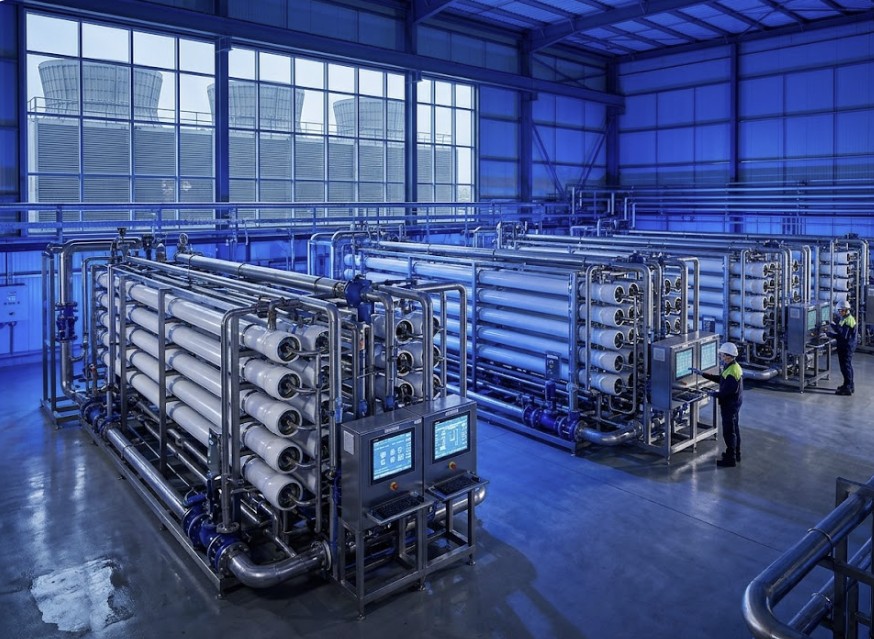
Modern sustainable water systems reduce industrial water demand through:
- Closed-loop cooling
- Wastewater recycling
- Membrane filtration
- Zero liquid discharge systems
- Advanced oxidation treatment
Industrial Benefits
| Benefit | Result |
|---|---|
| Lower water costs | Reduced operating expenses |
| Energy savings | Reduced heating/cooling costs |
| Regulatory compliance | Easier permitting |
| Reduced wastewater discharge | Lower environmental impact |
| Circular water reuse | Long-term sustainability |
Sustainable Water Systems in Smart Buildings
Smart buildings integrate digital monitoring with sustainable water management.
Technologies Used
- IoT water sensors
- Leak detection systems
- AI consumption analytics
- Automated shutoff valves
- Smart irrigation controllers
- Building management integration
Benefits
- Real-time consumption tracking
- Reduced leakage losses
- Lower maintenance costs
- Improved operational efficiency
- Better ESG performance
Sustainable Landscaping and Stormwater Systems
Outdoor water use can account for over half of residential consumption in dry climates.
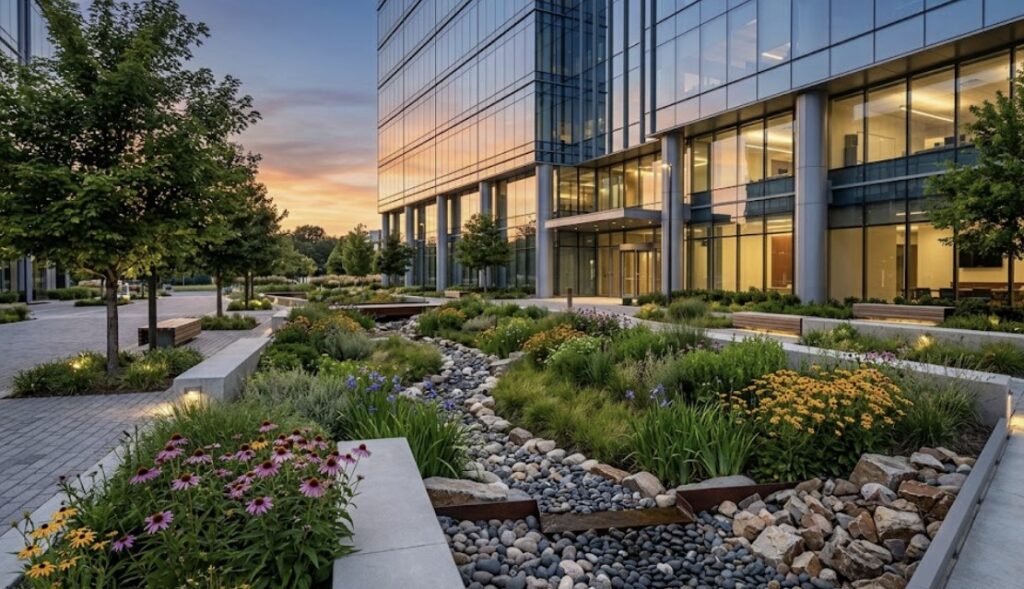
Sustainable landscaping systems reduce outdoor demand through:
- Xeriscaping
- Native vegetation
- Permeable pavement
- Rain gardens
- Bioswales
- Drip irrigation
Stormwater Management Benefits
- Prevents urban flooding
- Recharges groundwater
- Reduces pollution runoff
- Protects aquatic ecosystems
Water Quality Standards in Sustainable Water Systems
Water quality remains critical in decentralized systems.
Essential Water Quality Parameters
| Parameter | Importance |
|---|---|
| pH | Corrosion and health balance |
| Turbidity | Clarity and contamination |
| TDS | Mineral concentration |
| Bacteria count | Pathogen safety |
| Heavy metals | Toxicity prevention |
| Residual disinfectant | Ongoing protection |
Maintaining these standards is non-negotiable for human health. The [CDC’s guidelines on rainwater and greywater safety] provide the baseline for preventing pathogen growth in decentralized systems.
Common Purification Technologies
| Technology | Removes |
|---|---|
| UV sterilization | Bacteria and viruses |
| Activated carbon | Chemicals and odors |
| Reverse osmosis | Salts and metals |
| Ozone treatment | Organic contaminants |
| Ceramic filtration | Sediment and pathogens |
Economic Benefits of Sustainable Water Systems
Although installation costs vary, sustainable water systems often produce long-term financial savings.
Major Cost Savings Areas
- Reduced utility bills
- Lower wastewater fees
- Reduced bottled water expenses
- Lower irrigation costs
- Reduced infrastructure dependency
- Energy efficiency improvements
Return on Investment
| System Type | Typical ROI Timeline |
|---|---|
| Rainwater harvesting | 5–10 years |
| Greywater recycling | 4–8 years |
| Smart leak detection | 1–3 years |
| Industrial water reuse | 2–7 years |
| Atmospheric water systems | 3–8 years |
The financial logic is undeniable when you factor in utility inflation. We’ve analyzed the long-term payback periods and property value increases in our [greywater recycling benefits] ROI report.
Challenges Facing Sustainable Water Systems
Despite major advantages, several barriers still limit widespread adoption.
Key Challenges
Regulatory Restrictions
Some regions prohibit advanced water reuse or limit rainwater collection.
High Initial Capital Costs
Advanced recycling systems require significant upfront investment.
Maintenance Requirements
Filters, UV systems, membranes, and pumps require ongoing maintenance.
Public Perception
Many communities still resist potable water reuse despite scientific safety validation.
Future Trends in Sustainable Water Systems
The next generation of sustainable water systems will combine AI, renewable energy, and decentralized infrastructure.
Emerging Innovations
- AI-driven predictive leak detection
- Solar desalination
- Atmospheric water scaling
- Modular decentralized treatment plants
- Smart membrane filtration
- Digital water twins
- Circular industrial water ecosystems
Global Water Reuse Expansion
Governments and industries are rapidly accelerating water reuse adoption due to:
- Climate pressure
- Population growth
- Water scarcity
- ESG requirements
- Infrastructure aging
- Industrial sustainability targets
How to Design a Sustainable Water System
Successful design begins with accurate water demand analysis.
Step-by-Step Design Process
- Assess water demand
- Evaluate climate and rainfall
- Identify available water sources
- Determine potable vs non-potable demand
- Select storage capacity
- Design treatment systems
- Integrate recycling infrastructure
- Install smart monitoring systems
- Develop maintenance schedules
- Verify regulatory compliance
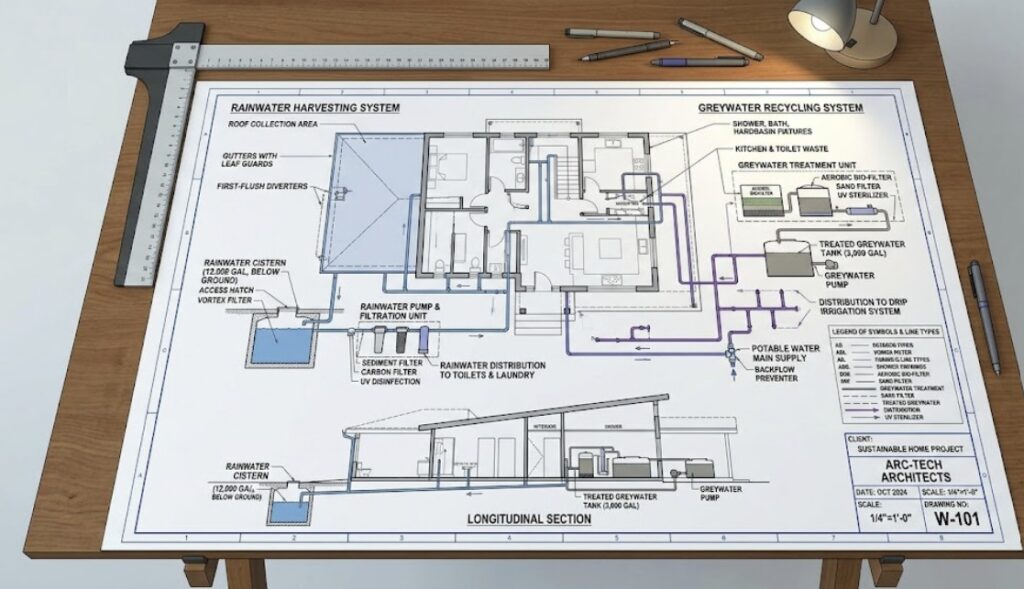
Example Residential Sustainable Water System
| System Component | Specification |
|---|---|
| Roof collection area | 2,500 sq ft |
| Rainwater tank | 5,000 gallons |
| Greywater recycling | 40% reuse |
| UV purification | Potable treatment |
| Solar pump | Off-grid operation |
| Smart monitoring | Leak and usage tracking |
Sustainable Water Systems and Climate Resilience
Climate-driven droughts, floods, and infrastructure failures are increasing the need for decentralized water resilience.
Sustainable water systems strengthen resilience by:
- Diversifying water sources
- Reducing grid dependency
- Protecting groundwater
- Supporting local water cycles
- Enabling emergency water access
- Lowering infrastructure stress
Communities with decentralized water reuse systems are better prepared for prolonged droughts and severe climate disruptions.
Why Sustainable Water Systems Matter
Water demand continues to rise while freshwater supplies become increasingly stressed. Sustainable water systems provide the infrastructure model required for long-term water security.
By combining:
- Water conservation
- Smart infrastructure
- Renewable energy
- Decentralized treatment
- Recycling technologies
- Net zero design principles
these systems create a scalable framework for resilient, efficient, and environmentally responsible water management.
Sustainable water systems are no longer experimental technologies. They are rapidly becoming the global standard for resilient buildings, industrial operations, agriculture, remote facilities, and future smart cities.
How do sustainable water systems improve public health?
Sustainable water systems improve public health by ensuring cleaner and more reliable access to safe water while reducing exposure to contaminated sources. Advanced filtration, ultraviolet disinfection, and water recycling technologies remove bacteria, viruses, heavy metals, and chemical pollutants from water supplies. In areas with aging infrastructure or poor sanitation, decentralized sustainable water systems can provide safer drinking water directly at the point of use. These systems also reduce waterborne disease risks by improving wastewater treatment and reducing environmental pollution.
Can sustainable water systems help during natural disasters?
Sustainable water systems are extremely valuable during natural disasters because they provide independent water access when centralized infrastructure fails. Hurricanes, floods, earthquakes, and droughts often disrupt municipal pipelines and treatment facilities, leaving communities without clean water for days or weeks. Decentralized systems such as rainwater harvesting, atmospheric water generators, and portable filtration units can continue operating independently and supply emergency drinking water. Sustainable water systems therefore play a critical role in disaster preparedness and long-term resilience planning.
Are sustainable water systems suitable for urban areas?
Sustainable water systems are increasingly being integrated into urban developments because cities face growing pressure on water infrastructure. High population density, aging pipelines, and rising demand make water conservation essential in urban environments. Green buildings now commonly include rainwater harvesting systems, greywater reuse technologies, and smart water monitoring devices to reduce municipal demand. Sustainable water systems also improve urban flood management by capturing stormwater and reducing runoff during heavy rainfall events.
How do sustainable water systems reduce wastewater pollution?
Sustainable water systems reduce wastewater pollution by treating and reusing water before it is discharged into the environment. Traditional wastewater infrastructure often releases partially treated effluent into rivers, lakes, or oceans, contributing to ecosystem degradation. Advanced sustainable water systems use membrane filtration, biological treatment, ultraviolet disinfection, and oxidation technologies to improve water quality before reuse or discharge. By recycling wastewater and reducing contamination, these systems help protect aquatic ecosystems and groundwater resources.
What role does technology play in sustainable water systems?
Technology is central to the performance and efficiency of sustainable water systems. Smart sensors, automated controls, and artificial intelligence now help monitor water quality, detect leaks, optimize treatment processes, and reduce waste. IoT-connected devices provide real-time consumption data that allows buildings and industries to improve efficiency and reduce operational costs. Emerging technologies such as atmospheric water generation, advanced membrane filtration, and solar-powered desalination are also expanding the capabilities of sustainable water systems worldwide.
Can sustainable water systems support agriculture?
Sustainable water systems are highly beneficial for agriculture because farming consumes a large percentage of global freshwater supplies. Rainwater harvesting, recycled irrigation water, drip irrigation systems, and groundwater recharge infrastructure help farmers reduce water waste while maintaining crop productivity. Sustainable water systems also improve drought resilience by providing alternative water sources during dry periods. Many agricultural operations now use precision irrigation technologies and treated wastewater to reduce dependence on freshwater extraction.
Why are decentralized sustainable water systems becoming more popular?
Decentralized sustainable water systems are becoming more popular because they provide flexibility, resilience, and localized water management. Instead of relying entirely on large centralized infrastructure, decentralized systems treat and reuse water near the point of consumption. This reduces strain on municipal networks, lowers transportation costs, and improves reliability during infrastructure failures or droughts. As climate change increases pressure on water resources, decentralized systems are increasingly viewed as practical long-term solutions.
How do sustainable water systems reduce energy consumption?
Sustainable water systems reduce energy consumption by minimizing long-distance water transportation and improving treatment efficiency. Traditional centralized systems require significant energy for pumping, treatment, and distribution across large regions. Water recycling and localized treatment reduce these energy requirements because water is reused onsite rather than transported from distant facilities. Many sustainable water systems also integrate renewable energy sources such as solar panels and wind-powered pumps, further reducing operational emissions.
What is water reuse in sustainable water systems?
Water reuse refers to the process of treating wastewater so it can be used again for beneficial purposes. Sustainable water systems commonly recycle greywater and treated wastewater for irrigation, industrial cooling, toilet flushing, and groundwater recharge. Some advanced potable reuse systems can even purify wastewater to drinking water standards. Water reuse is one of the most effective ways to conserve freshwater resources and improve long-term water sustainability in both urban and industrial environments.
Are sustainable water systems environmentally friendly?
Sustainable water systems are designed specifically to reduce environmental impact while improving water efficiency. These systems lower freshwater extraction, reduce pollution, minimize plastic waste, and decrease energy consumption associated with water transportation and treatment. Rainwater harvesting and green infrastructure also improve groundwater recharge and reduce flooding caused by stormwater runoff. By promoting circular water use and conservation, sustainable water systems support healthier ecosystems and more sustainable resource management.
How do sustainable water systems help reduce bottled water use?
Sustainable water systems reduce bottled water use by providing safe drinking water directly at homes, offices, schools, and remote sites. Atmospheric water generators, advanced filtration systems, and decentralized purification technologies eliminate the need for transporting bottled water over long distances. Since billions of plastic bottles are discarded annually, replacing bottled water with onsite water generation significantly reduces landfill waste and ocean pollution. This also lowers transportation-related greenhouse gas emissions.
Can sustainable water systems increase property value?
Properties equipped with sustainable water systems often become more attractive to environmentally conscious buyers and investors. Water-efficient buildings can offer lower utility costs, improved resilience during shortages, and better long-term sustainability performance. Green building certifications that include water sustainability criteria can also improve marketability and asset value. As water scarcity becomes a growing concern in many regions, buildings with advanced sustainable water systems may gain additional competitive advantages.
How do sustainable water systems contribute to smart cities?
Sustainable water systems are an essential component of smart city development because they improve infrastructure efficiency, environmental performance, and urban resilience. Smart water monitoring technologies can identify leaks, optimize distribution, and reduce waste across entire municipal networks. Decentralized treatment systems and stormwater capture infrastructure also help cities manage growing populations while reducing pressure on aging utilities. Sustainable water systems support data-driven urban planning and more efficient resource management.
What are the maintenance requirements for sustainable water systems?
Most sustainable water systems require routine inspection and maintenance to ensure proper operation and water safety. Filters, pumps, ultraviolet lamps, and storage tanks must be cleaned or replaced periodically depending on system design and water quality conditions. Automated monitoring systems help simplify maintenance by identifying performance issues early. Although maintenance responsibilities vary by system type, proper servicing is essential for maximizing efficiency, extending equipment lifespan, and ensuring reliable water quality.
Can sustainable water systems work in cold climates?
Sustainable water systems can operate effectively in cold climates when designed with proper insulation, freeze protection, and seasonal management strategies. Underground storage tanks, insulated piping, and heated components help prevent freezing during winter conditions. Snowmelt can also contribute to rainwater collection systems in some regions. Many sustainable water systems are specifically engineered to function across a wide range of environmental conditions, including extreme temperatures.
How do sustainable water systems improve water security?
Sustainable water systems improve water security by diversifying water sources and reducing dependence on a single centralized supply. Communities and businesses that rely entirely on municipal infrastructure may face shortages during droughts, contamination events, or infrastructure failures. By incorporating rainwater harvesting, recycling systems, and alternative water generation technologies, sustainable water systems create additional layers of resilience that ensure more reliable long-term water availability.
What is the connection between sustainable water systems and climate change?
Climate change is increasing stress on global water supplies through droughts, floods, rising temperatures, and changing precipitation patterns. Sustainable water systems help communities adapt to these challenges by improving conservation, increasing water reuse, and reducing dependence on vulnerable infrastructure. Green stormwater systems also help manage extreme rainfall events and reduce urban flooding. As climate conditions become more unpredictable, sustainable water systems will become increasingly important for long-term adaptation strategies.
Can businesses benefit from sustainable water systems?
Businesses benefit from sustainable water systems by lowering operating costs, improving ESG performance, and reducing regulatory risks. Industrial facilities that recycle process water can significantly reduce freshwater consumption and wastewater discharge fees. Water-efficient infrastructure also helps businesses remain operational during drought restrictions or supply disruptions. Many companies now invest in sustainable water systems as part of broader sustainability and resilience initiatives.
How do sustainable water systems support groundwater conservation?
Sustainable water systems help conserve groundwater by reducing excessive extraction from aquifers and increasing natural recharge opportunities. Rainwater harvesting, stormwater infiltration basins, and treated wastewater reuse all reduce dependence on underground freshwater reserves. In many regions, groundwater depletion has become a serious environmental problem due to overuse and declining recharge rates. Sustainable water systems help restore balance by conserving existing supplies and returning water safely to the environment.
Why are sustainable water systems important for future cities?
Future cities will face increasing water challenges due to population growth, urbanization, and climate change. Sustainable water systems provide scalable solutions that improve efficiency, reduce waste, and increase resilience. Cities that integrate decentralized reuse systems, smart monitoring infrastructure, and green stormwater management will be better prepared to handle future resource pressures. Sustainable water systems also support healthier urban environments by improving water quality and reducing environmental pollution.
What is the long-term outlook for sustainable water systems?
The long-term outlook for sustainable water systems is extremely strong because global demand for water-efficient infrastructure continues to grow. Governments, industries, and communities increasingly recognize that traditional linear water management approaches are unsustainable. Advances in filtration technology, automation, renewable energy integration, and water reuse will continue making sustainable water systems more efficient and affordable. Over time, decentralized and circular water management models are expected to become standard components of modern infrastructure worldwide.